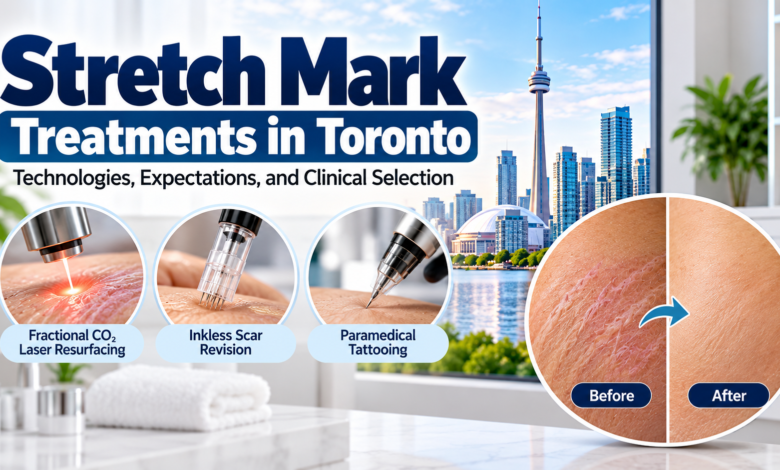
Stretch marks, clinically known as striae distensae, are among the most common structural skin changes adults experience. Whether formed during growth spurts, pregnancy, weight fluctuations, or intensive athletic training, these linear scars develop deep within the dermal layer when the skin stretches faster than its structural fibers can adapt.
While stretch marks are entirely natural and physically harmless, their appearance often leads individuals to seek professional cosmetic therapies. Navigating the sheer variety of options can be overwhelming: topical creams, micro-needling, laser skin resurfacing, inkless revision, and paramedical tattooing all promise varying degrees of improvement.
Choosing the right approach requires an understanding of how dermal scar tissue forms, how modern resurfacing and pigment technologies work, and how to select a qualified stretch mark treatment clinic in Toronto, ON that prioritizes clinical safety and individualized care.
The Physiology of Stretch Marks: Why Surface Creams Fall Short
To understand why professional clinical procedures are necessary for meaningful stretch mark reduction, it helps to examine the anatomy of the skin. The skin consists of three primary layers: the epidermis (outer protective barrier), the dermis (middle structural layer containing collagen and elastin), and the hypodermis (subcutaneous fat layer).
Stretch marks occur in the dermis. When rapid stretching causes the dermal connective tissue to exceed its elasticity limits, the collagen and elastin matrix tears. As the skin attempts to heal itself, localized micro-scars form in these torn regions.
Stretch marks typically evolve through two distinct clinical phases:
- Striae Rubrae (Early Stage): Newly formed stretch marks appear red, purple, or reddish-brown due to active inflammation and dilated blood vessels beneath the skin. Because collagen remodeling is still actively occurring, early-stage marks often respond more rapidly to vascular lasers and hydrating dermal therapies.
- Striae Albae (Mature Stage): Over time, blood vessels contract, inflammation subsides, and the tissue loses pigment, resulting in silvery-white, indented, or textured lines. Dermal atrophy in mature stretch marks makes them more resistant to standard surface treatments, requiring modalities that trigger deep collagen synthesis or optically blend the mark with surrounding skin.
Topical lotions, oils, and over-the-counter creams only reach the superficial layers of the epidermis. While they may improve skin hydration, they cannot penetrate deep enough into the dermis to rebuild broken collagen networks or restore lost melanocyte activity. True structural improvement requires targeted clinical interventions.
Modern Non-Surgical Modalities for Stretch Mark Improvement
A decade ago, options for stretch mark correction were limited and frequently involved prolonged recovery periods or unpredictable outcomes. Recent advancements in aesthetic technology have introduced far more precise, low-downtime options. Reputable providers evaluate the age, depth, location, and pigment profile of the stretch marks to build a targeted regimen rather than relying on a single technique.
1. Fractional CO₂ Laser Resurfacing & CoolPeel® Technology
Fractional carbon dioxide (CO₂) lasers have long been considered the benchmark for textural skin revision. Traditional ablative lasers remove the entire surface layer of skin, requiring significant downtime and carrying a higher risk of post-inflammatory hyperpigmentation (PIH), particularly on deeper skin tones.
Modern fractional CO₂ systems, such as CoolPeel®, deliver microscopic columns of laser energy into the dermis while preserving the surrounding tissue. This process creates controlled micro-injuries that stimulate the body’s natural wound-healing response, triggering fresh collagen and elastin production without inflicting excessive thermal damage on adjacent skin.
- Best For: Indented, textured striae albae, wide stretch marks, and overall dermal skin tightening.
- Benefits: Noticeable improvements in skin smoothness and firmness with significantly less downtime than legacy ablative lasers.
2. Inkless Scar Revision (ISR)
Inkless Scar Revision (also referred to as inkless micro-needling or serum-assisted scar therapy) is a non-pigment approach focused on textural restoration. Using fine, specialized needles, an aesthetic specialist creates micro-channels along the exact path of the stretch mark while applying tailored serums containing peptides, growth factors, and vitamins.
Unlike traditional microneedling, ISR focuses specifically on the damaged scar tissue itself. The combination of physical mechanical stimulation and cellular nutrient delivery encourages the skin to regenerate its own collagen fibers, smoothing raised or depressed ridges.
- Best For: Both textured and flat stretch marks where skin texture restoration is the primary goal.
- Benefits: Pigment-free, low downtime, and highly targeted skin renewal suitable for a broad array of skin types.
3. Paramedical Tattooing (Stretch Mark Camouflage)
While laser resurfacing and inkless revision focus on structural and textural repair, paramedical tattooing focuses on visual blending. Stretch mark camouflage involves depositing custom-blended, medical-grade pigments into the upper dermis of flat, white striae albae to match the exact tone of the surrounding healthy skin.
When performed by a trained practitioner, camouflage tattooing conceals the contrast between the pale mark and neighboring tissue, making the stretch mark significantly less visible to the naked eye.
- Best For: Healed, flat, pale, or silvery stretch marks (striae albae) that are smooth to the touch.
- Benefits: Immediate optical blending and long-lasting cosmetic concealment.
Comparing Treatment Options: Choosing the Right Approach
Because every individual’s skin responds differently, understanding how these options compare is crucial before committing to a treatment plan.
| Treatment Modality | Core Mechanism | Target Outcome | Average Recovery Window | Ideal Candidates |
|---|---|---|---|---|
| Fractional CO₂ / CoolPeel® | Fractional thermal energy to stimulate dermal collagen. | Textural smoothing, skin tightening, depth reduction. | 2–5 days of minor redness/roughness. | Textured, indented striae; general skin rejuvenation needs. |
| Inkless Scar Revision | Micro-channeling combined with nutrient healing serums. | Cellular regeneration, collagen synthesis, smooth texture. | 3–7 days of localized healing. | Clients seeking pigment-free structural skin renewal. |
| Paramedical Camouflage | Custom pigment deposit into the dermis via specialized tattooing. | Color contrast reduction and optical tone blending. | 7–14 days for pigment settling. | Smooth, pale/white stretch marks that contrast with skin tone. |
Leading aesthetic practices, such as Bonito Beauty Bar, often incorporate advanced fractional CO₂ platforms alongside specialized skin renewal techniques to address both texture and pigmentation in a structured, multi-phase plan.
Essential Criteria for Selecting a Stretch Mark Treatment Clinic in Toronto, ON
Toronto is home to a dense aesthetic medicine market, ranging from boutique day spas to specialized clinical practices. Because stretch mark removal involves deep dermal work, whether through laser energy, needle stimulation, or pigment implantation, selecting the right facility is vital for safety, comfort, and results.
When evaluating prospective clinics across the Greater Toronto Area, consider the following standards:
1. Clinical Oversight and Specialist Expertise
A reputable clinic should be staffed by trained skin specialists, medical aesthetic technicians, or overseen by licensed health practitioners (such as Nurse Practitioners or Physicians). Medical oversight ensures that candidate screening, skin type analysis, and emergency protocols adhere to strict safety standards.
Clinics such as Bonito Beauty Bar in North Toronto emphasize starting with an in-depth consultation to determine whether a client’s specific skin profile and scar history make them an appropriate candidate for laser resurfacing, inkless revision, or paramedical camouflage.
2. Tailored, Multi-Modal Treatment Planning
Avoid clinics that promote a single “magic bullet” solution for every type of stretch mark. A client with deep, dark-toned textured stretch marks on the abdomen requires a completely different care pathway than someone seeking tone correction for fine white marks on the hips.
A high-standard practice will assess key variables:
- Scar maturity: Is the mark actively inflamed or long-healed?
- Texture vs. Color: Is the primary issue depth and crepiness, or color contrast?
- Fitzpatrick Skin Scale rating: Higher Fitzpatrick types (IV–VI) require carefully controlled laser settings or alternative modalities like inkless revision to avoid hyperpigmentation.
3. Consultation Quality and Honest Expectation Management
No ethical aesthetic clinic will promise “100% complete removal” of stretch marks. Because dermal tissue damage involves permanent structural shifts in the skin matrix, realistic goals center around significant reduction, textural smoothing, and tone blending.
During a proper consultation, your provider should carefully inspect the treatment area, explain the exact mechanism of their recommended procedures, outline expected downtime, and clearly state how many sessions will likely be necessary.
What to Expect: From Consultation to Recovery
Understanding the step-by-step patient journey helps ensure a smooth experience and optimal healing.
Preparation
Before undergoing laser resurfacing or microneedling therapies, patients are typically advised to avoid direct sun exposure, tanning beds, and aggressive chemical exfoliants for 2–4 weeks. Keeping the skin thoroughly hydrated beforehand aids in post-procedure cellular recovery.
The Treatment Session
On the day of the session, a topical numbing agent is applied to ensure client comfort. Depending on the size of the area and the chosen modality, sessions typically last between 45 and 90 minutes.
Aftercare and Local Seasonal Factors
Post-treatment care plays an essential role in preventing side effects and maximizing collagen production.
- Sun Protection: Toronto’s distinct seasonal shifts mean sun care strategies must adapt throughout the year. Direct UV exposure on healing skin can trigger hyperpigmentation, particularly after laser or micro-needling treatments. Applying broad-spectrum SPF 30+ daily to exposed areas is non-negotiable.
- Moisture Barrier Support: Patients should use gentle, fragrance-free ointments or healing creams recommended by their practitioner to maintain barrier protection during the initial 3–7 day healing window.
- Avoiding Heat and Sweat: Strenuous workouts, hot tubs, and saunas should be avoided for a few days post-treatment to reduce unnecessary swelling and prevent bacterial contamination.
When evaluating options for your skin journey, speaking with Bonito Beauty Bar’s clinical team can help clarify which modality matches your skin’s specific collagen response and aesthetic objectives.