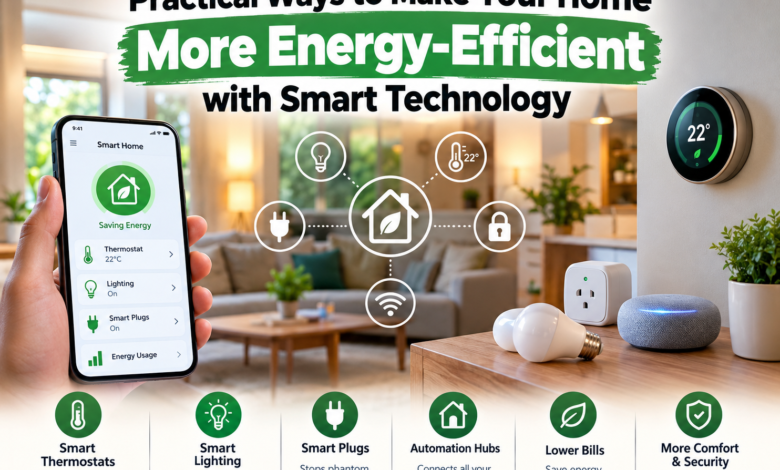
Energy bills keep climbing, and most homeowners are looking for real solutions rather than quick fixes. Smart home technology is changing how we manage energy consumption, giving us tools to track and control usage like never before. Home automation systems help reduce utility bills while improving everyday comfort, all without requiring you to sacrifice convenience.
This guide walks through practical ways to implement energy-efficient smart technology in your home, starting with the basics and building up to a fully connected system.
Understanding Home Automation Basics
Home automation integrates connected devices to control heating, cooling, and lighting from a single interface. Instead of manually adjusting each system in your house, you can manage everything through an app or voice command.
Smart thermostats and energy monitors provide real-time consumption data, showing you exactly where your electricity and gas are going. This visibility is often the first step toward meaningful savings, since you can’t reduce what you can’t measure.
Home automation makes energy management effortless and accessible, even for people who aren’t particularly tech-savvy. Most systems are designed with simple setup processes and intuitive controls, so you don’t need an engineering degree to get started.
Key Smart Technologies for Energy Efficiency
A handful of devices do most of the heavy lifting when it comes to cutting energy waste.
Smart thermostats learn your schedule and adjust temperatures automatically. Over time, they figure out when you’re home, when you’re asleep, and when you’re away, fine-tuning the temperature to match your actual needs instead of running constantly on a fixed setting.
LED smart lighting systems with motion sensors reduce wasted electricity by ensuring lights only turn on when someone is actually in the room. No more lights left on in empty bedrooms or hallways.
Smart plugs monitor appliance usage and eliminate phantom power drain, the slow drip of electricity that devices use even when turned off. Plugging your TV, gaming console, or coffee maker into a smart plug lets you cut power completely when not in use.
Home automation hubs centralize control of multiple devices, pulling your thermostat, lighting, and plugs into one system so they work together instead of operating in isolation.
Practical Implementation Steps
Building a smart, energy-efficient home doesn’t need to happen all at once. A gradual approach tends to work best.
Start with high-impact devices like smart thermostats and lighting. These two categories typically account for the largest share of home energy use, so upgrading them first delivers the most noticeable results.
Use home automation to schedule appliances during off-peak hours. Many utility providers charge less for electricity used at night or during low-demand periods, and automation lets you run dishwashers, washing machines, and other appliances during those windows without lifting a finger.
Monitor energy usage through smart home dashboards and apps. These tools break down consumption by device or room, helping you spot patterns and identify where further savings might be possible.
Gradually expand your home automation system based on needs. There’s no requirement to buy everything at once. Add a smart lock here, a window sensor there, and let the system grow as your budget and priorities allow.
Benefits Beyond Energy Savings
While lower utility bills are the main draw, home automation offers plenty of additional value.
Increased convenience comes from automated home automation routines, like having your lights dim and your thermostat adjust automatically when you settle in for the evening. These small touches add up to a noticeably easier daily routine.
Enhanced home security is another major benefit, with smart locks and monitoring systems letting you check in on your property from anywhere. Many of these devices integrate directly with the same hub managing your energy use.
Better control over your living environment year-round means your home stays comfortable in both summer heat and winter cold, without you having to manually adjust settings every time the weather shifts.
Start Small, Save Big
Smart technology and home automation offer immediate energy efficiency gains, often visible within the first billing cycle after installation. The key is to begin with foundational devices, like a smart thermostat or a few smart plugs, and expand your home automation ecosystem over time as you see what works for your household.
Small changes in home automation lead to significant long-term savings, both in terms of lower bills and a more comfortable, responsive home. You don’t need to overhaul your entire house overnight. Pick one area to start, get comfortable with it, and build from there.