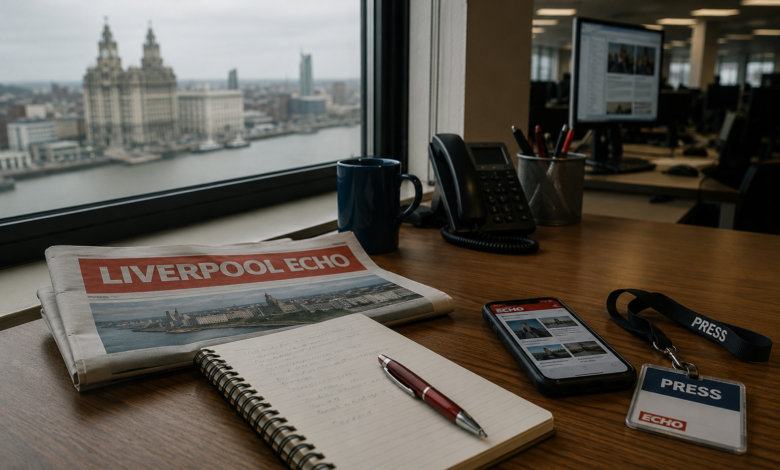
Liverpool Echo has told the story of Liverpool and Merseyside for more than 145 years. It began as a low-cost evening newspaper and grew into a daily news brand with a major digital audience.
The publication covers breaking news, crime, politics, transport, health, education, business and community life. Sport is central to its identity, with dedicated coverage of Liverpool FC and Everton FC. Its website also provides family notices, event guides, weather updates, shopping advice and stories from neighbourhoods across the Liverpool City Region.
This guide explains the newspaper’s history, ownership, leadership, services, audience, editorial standards and place in modern British journalism.
Liverpool Echo Quick Bio
| Fact | Detail |
|---|---|
| Full name | Liverpool Echo |
| Type | Regional daily newspaper and digital news service |
| First issue | 27 October 1879 |
| Founder | Alexander Jeans |
| Original purpose | A cheaper evening partner to the Liverpool Daily Post |
| Main area | Liverpool and Merseyside |
| Owner | Reach plc |
| Newsroom | 5 St Paul’s Square, Liverpool |
| Editor on 2 September 2026 | Maria Breslin, during a handover |
| Incoming editor | Steve Graves, due to take charge in late September 2026 |
| Regulator | Independent Press Standards Organisation |
| Print circulation | 6,718 copies per issue, January to June 2026 |
| Digital audience | 6.5 million users in May 2026 |
What Is Liverpool Echo?
Liverpool Echo is a regional newspaper and online news service based in Liverpool, England. It publishes from Monday to Sunday and serves the wider Merseyside area. Its main website carries live updates, while the printed newspaper gives a selected account of major local stories, sport and community affairs.
The brand has a strong local focus. Its journalists cover Liverpool city centre, Wirral, Sefton, Knowsley, St Helens and Halton. Smaller area pages include Toxteth, Aigburth, Bootle, Kirkby, Birkenhead, Crosby and Formby.
News and Community Coverage
Daily coverage includes crime, policing, courts, housing, schools, hospitals, council policy and transport. Live blogs are often used for serious incidents, elections and major events. Service articles give practical help on benefits, energy bills, travel disruption and changes to local services.
The culture section covers concerts, theatre, restaurants, nightlife, family days out and seasonal events. Nostalgia also has a strong place.
Liverpool Echo Football Coverage
Football is one of the publication’s greatest strengths. Liverpool FC and Everton FC each have a dedicated section with transfer updates, injury news, team selection, match coverage, interviews, opinion and analysis. Specialist journalists follow both clubs throughout the season.
Coverage also includes Tranmere Rovers, women’s football, non-league teams, boxing, rugby league, cricket and Aintree racing. The global support for Liverpool FC gives the website an audience far beyond Merseyside. Everton coverage remains just as important to the title’s local identity and daily output.
Liverpool Echo History Since 1879
The first edition was published on 27 October 1879. Alexander Jeans founded it as an affordable evening companion to the Liverpool Daily Post. The low price helped the new paper reach working people who wanted fresh news after the working day.
The business grew with Liverpool during a period of trade, migration and major social change. In 1904, the Daily Post merged with the Liverpool Mercury. The company’s legal name at that time included the Post, Mercury and Echo, linking the modern owner’s corporate history with the city’s old press industry.
Growth, Rivalry and Change
The Liverpool Evening Express ended in 1958 and was absorbed by the Echo. In 1973, editorial operations moved from Victoria Street to a purpose-built office in Old Hall Street. That building became closely linked with journalism in the city.
After the Hillsborough disaster in April 1989, the newspaper produced a special 28-page Sunday edition. All 75,000 copies were sold. The tragedy shaped the title’s work for decades, especially its support for bereaved families and the campaign for justice and legal reform.
Printing moved from Liverpool to Oldham during 2008 and 2009, though the editorial team stayed in the city. The Liverpool Daily Post closed in 2013, leaving the Echo as Liverpool’s only daily newspaper. Regular Sunday publication began on 19 January 2014.
The Digital Era
A reader-led relaunch took place in 2015 after the striking #TellAli campaign, which used a blank front page to invite views about the paper. In March 2018, the newsroom moved to 5 St Paul’s Square. Two months later, parent company Trinity Mirror changed its name to Reach plc.
The website, apps and social channels now carry breaking coverage faster than print can. Digital subscriptions arrived in December 2025 through Liverpool Echo Premium. The old newspaper is therefore now a mixed media service rather than a print-only title.
Who Owns Liverpool Echo?
Reach plc owns the publication. Reach is one of Britain’s largest commercial news groups and controls more than 120 print and online brands.
The audited print certificate names Reach Regionals Limited as the print owner. This is part of the same wider group. Shared technology, advertising systems and production services support the local newsroom, while Reach states that each title keeps editorial freedom.
Maria Breslin became editor in 2020 and was the first woman to hold the role. On 27 August 2026, Reach named Steve Graves as her successor. Breslin remained editor-in-chief during the handover on 2 September, while Graves was due to take full control in late September. He joined the publication as a journalist in 2013 and later held senior newsroom roles.
Website, App and Subscription Services
The website is free for much of its content and is funded mainly by advertising. Users can follow live news, personalise topics, comment on stories and receive alerts through the main mobile app. A separate app focuses on Liverpool FC. Email newsletters, WhatsApp communities, social channels and RSS feeds offer more ways to keep up with chosen subjects.
Family notices form an important service. The site carries death notices, funeral details, tributes and other family announcements. It also hosts public notices, jobs, property pages, local business entries, competitions and commercial offers.
Liverpool Echo Premium
Premium launched in December 2025 with exclusive articles, fewer standard display adverts, audio features, puzzles, rewards and access through the website and app. The monthly price found on 2 September 2026 was £4.99. Official indexed annual offers gave two different prices, £39.99 and £49.99, so customers should confirm the live checkout amount before paying.
A separate Privacy Plus plan was priced at £2.99 per month and focused on removing adverts. It should not be confused with Premium, which unlocks paid journalism and extra benefits. Most public-interest coverage remains available through the free, advertising-supported service.
Liverpool Echo Audience and Circulation
Print circulation and online use are different measures. From January to June 2026, the newspaper averaged 6,718 copies per issue. That total included 5,946 single-copy sales and 772 paid subscriptions. The figure was 12.1 per cent below the previous six-month period and 25.4 per cent below the same period in 2025.
Online reach is far greater but can change quickly. In May 2026, industry measurement placed the website at 6.5 million users and 36.4 million page views. The audience was 15 per cent lower than a year earlier, yet the site gained more page views than the Manchester Evening News that month.
These figures show how regional journalism has changed. Thousands still buy the paper, while millions visit online for football, crime, courts, breaking incidents and practical advice. Social platforms can add huge reach, though follower totals and monthly use should always carry a date.
Editorial Standards, Campaigns and Trust
The Independent Press Standards Organisation regulates the newspaper, Sunday edition and website. The Editors’ Code covers accuracy, privacy, children, harassment and other duties. The title provides a complaints route, and eligible unresolved cases can go to the regulator.
The publication has a long campaigning tradition. Its Hillsborough work has supported families seeking justice and stronger legal duties for public bodies. A 16-month investigation also revealed that 14 local politicians had 51 parking penalties cancelled. The work led to political departures and an audit of council parking operations. Another major campaign supported Zoe’s Place children’s hospice.
The title won Daily News Brand of the Year at the 2025 Regional Press Awards. In 2026, it gained four honours, including Best Live Coverage and Campaign of the Year for its Hillsborough Law work. Individual journalists also won major prizes.
Accuracy and Accountability
No news organisation is free from mistakes. The regulator found a children’s privacy breach in a 2023 case after identifying details and photographs were published without enough public-interest justification. A 2024 decision found an accuracy breach in coverage of a professional disciplinary matter.
These rulings matter because they show both failure and accountability. They should not be used to declare every article trustworthy or untrustworthy. People should assess the evidence in each story, note whether primary documents are used and check whether corrections have been added.
Why Liverpool Echo Still Matters
The publication remains part of Liverpool’s civic life. It records everyday events that national outlets may miss, questions local authorities, follows both major football clubs and preserves the city’s memory. Its notices mark births and deaths, while its campaigns can bring hidden failures into view.
Its future will depend on balancing free access, digital income, trust and local depth. Falling print sales and unstable online traffic create real pressure. Yet the brand still combines a historic daily paper, a large website, specialist sport coverage and close ties to Merseyside communities.
Liverpool Echo has changed greatly since 1879, but its central duty remains clear: to explain what is happening in Liverpool, why it matters and how it affects the people who call the city region home.
FAQs
1. What is Liverpool Echo?
Liverpool Echo is a regional daily newspaper and digital news service. It covers Liverpool, Merseyside and nearby areas, with a strong focus on local news, football, crime, politics and community affairs.
2. Who owns the newspaper?
Reach plc owns the publication. The company manages more than 120 national and regional media brands across the United Kingdom.
3. When was the newspaper founded?
The first edition was published on 27 October 1879. Alexander Jeans created it as an affordable evening companion to the Liverpool Daily Post.
4. Who is the current editor?
Maria Breslin remained editor-in-chief during the September 2026 handover. Steve Graves was appointed as her successor and was due to take full control later that month.
5. What does the website cover?
The website covers breaking local news, Liverpool FC, Everton FC, crime, courts, politics, transport, health, education and community events. It also provides family notices, weather updates, entertainment guides and subscription content.