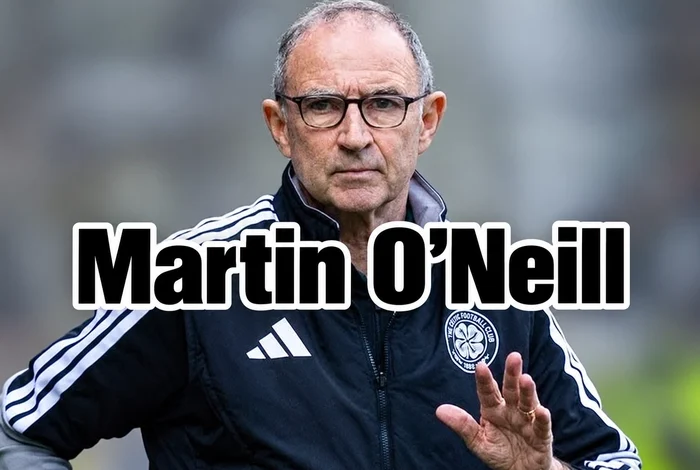
Martin O’Neill has experienced football from almost every angle: European champion, international captain, trophy-winning manager and television pundit. His career connects the extraordinary Nottingham Forest teams of Brian Clough with Leicester City’s cup successes and Celtic’s memorable European nights.
His story also reaches beyond results. Family commitments shaped major career decisions, while his education, Irish identity and interest in writing offer a fuller picture of the man behind the touchline gestures. At 74, he remains involved in the demands of management, with achievements stretching across more than five decades.
Martin O’Neill Quick Bio
| Detail | Facts |
|---|---|
| Full name | Martin Hugh Michael O’Neill |
| Born | 1 March 1952 |
| Age | 74, as of October 2026 |
| Birthplace | Kilrea, County Derry, Northern Ireland |
| National identity | Northern Irish; identifies as Irish |
| Occupation | Football manager, former midfielder, author and pundit |
| Current club | Celtic |
| Height | 1.78 metres |
| Weight | Current measurement unverified |
| Wife | Geraldine O’Neill |
| Children | Alana and Aisling |
| Parents | Leo and Greta O’Neill |
| Siblings | Four brothers and four sisters |
| Religion | Catholic upbringing |
| Education | St Columb’s, St Malachy’s and Queen’s University Belfast |
| Net worth | No verified figure |
| Current salary | Not disclosed |
Martin O’Neill’s Early Life and Family
Born in Kilrea on 1 March 1952, O’Neill was the sixth of nine children. His father, Leo, worked as a barber, while his mother, Greta, helped raise a family with strong ties to Irish culture and Catholic traditions.
Gaelic football played a central role in childhood. His father helped establish the local club, and his brothers Gerry and Leo represented Derry. Young Martin also played the sport before professional association football became his ambition.
His move between the two games brought difficulties. The GAA’s former restrictions on participation in other sports affected his school football. He later spoke about the experience as part of his reflections on identity, belonging and tolerance.
Education and Law Studies
He attended St Columb’s College in Derry and later St Malachy’s College in Belfast. Academic interests accompanied his sporting talent, leading him to study law at Queen’s University Belfast.
He left the course in 1971 to join Nottingham Forest. He did not complete that law degree. However, Queen’s awarded him an honorary doctorate for services to sport in July 2005, recognising achievements built through a different career.
Nationality, Religion and Accent
Northern Irish describes his birthplace and international football background. He has also spoken clearly about his Irish identity and Catholic upbringing. His company registration record uses British nationality, a separate administrative description.
His familiar Northern Irish accent remains part of his broadcasting presence. His documented cultural background supports discussion of his Irish roots, but a more precise ethnic label would require evidence beyond assumptions about birthplace or family names.
Martin O’Neill’s Wife and Children
O’Neill met Geraldine as a teenager, and they married in 1979. The couple have two daughters, Alana and Aisling. Their family life has generally remained less exposed than his football career.
In 2005, Geraldine’s lymphoma diagnosis prompted him to leave Celtic and support her during treatment. The decision interrupted a successful managerial spell but reflected his priorities when football and family needs collided.
He returned to management with Aston Villa the following year. His comments during that period made clear that illness had changed how he judged sporting setbacks and achievements.
Martin O’Neill’s Playing Career
Distillery and the Move to England
His early football included Rosario and Distillery. At Distillery, he scored twice in the 1971 Irish Cup final victory and later scored against Barcelona in the European Cup Winners’ Cup.
Nottingham Forest signed him in October 1971. The transfer took him away from university and into English professional football, although the club’s greatest days were still ahead.
European Success with Nottingham Forest
Brian Clough’s arrival transformed Forest. O’Neill helped the club win promotion in 1977 and the First Division championship in 1978. League Cup victories and European honours followed.
Forest won the European Cup in 1979 and 1980. He belonged to both successful squads, although he did not play in the first final. He started the 1980 victory against Hamburg, earning his place in one of English football’s finest club stories.
Later spells took him to Norwich City, Manchester City and Notts County. Knee problems eventually ended his playing career.
Northern Ireland and the World Cup
He earned 64 senior caps and scored eight international goals. As captain at the 1982 World Cup, he helped Northern Ireland progress from a group that included hosts Spain.
That campaign reached the second group stage. It remains a defining achievement in the country’s football history and an important part of his standing as a player.
Martin O’Neill’s Management Career
Wycombe and Leicester City
Early appointments at Grantham Town and Shepshed Charterhouse introduced him to management. Wycombe Wanderers then provided the platform for a major breakthrough.
He led Wycombe into the Football League in 1993 and secured another promotion through the 1994 play-offs. Two FA Trophy victories strengthened his reputation for building winning teams.
After a brief Norwich spell, he joined Leicester in December 1995. Promotion followed in 1996, before League Cup triumphs in 1997 and 2000. Four consecutive top-half Premier League finishes showed that cup success rested on sustained progress.
Celtic’s Treble and European Final
His arrival at Celtic in 2000 changed the club’s fortunes. A domestic treble in his first season established immediate authority, while a memorable 6–2 victory over Rangers gave supporters fresh belief.
Henrik Larsson, Chris Sutton and Neil Lennon became central figures in a powerful side. Celtic reached the 2003 UEFA Cup final in Seville, losing to Porto after extra time.
His first five years brought three league titles and seven domestic trophies. The European campaign added a lasting emotional connection with supporters.
Aston Villa, Sunderland and Ireland
At Aston Villa, he achieved three consecutive sixth-place Premier League finishes and reached the 2010 League Cup final. Sunderland brought early improvement but ended with dismissal in March 2013.
He then became Republic of Ireland manager, with Roy Keane as assistant. Ireland qualified for Euro 2016, beat Italy and reached the last 16.
Failure to qualify for the 2018 World Cup and later poor results weakened his position. His Ireland tenure ended in November 2018. A brief Nottingham Forest appointment followed in 2019.
Celtic Return and Latest Developments
He returned to Celtic in an interim role in October 2025. After Wilfried Nancy’s short spell, he took charge again and guided the club to the 2025–26 league and Scottish Cup double.
Celtic confirmed a permanent appointment in June 2026, with a one-year contract and an additional year’s option.
The latest verified match development was a 2–1 home defeat to Celta Vigo on 22 October 2026. It left Celtic without a point after three Europa League fixtures. O’Neill maintained that progression remained possible.
Health and Recent Absence
Celtic confirmed that their manager underwent a small hospital procedure in August 2026. He was discharged shortly afterwards, with assistant Shaun Maloney describing his recovery positively. He missed the Kilmarnock match while recovering at home.
The club did not disclose a specific diagnosis. His return to work should therefore be described through confirmed football activity, without drawing conclusions about medical matters that remain private.
Martin O’Neill’s Net Worth and Income
No independently verified figure establishes his net worth. His current Celtic salary was not disclosed in the appointment announcement, so a precise wage should not be treated as confirmed.
His income-generating career includes playing, management, television analysis, books and speaking engagements. Historical newspaper estimates placed his Ireland earnings at different levels, including approximately €1 million annually in 2016 and €2 million in late 2018.
Those dated estimates are separate from his present salary. The approximately €1.9 million Ireland severance payment covered the management team, including Keane and other staff, rather than O’Neill alone.
Companies and Commercial Activities
Companies House records matching his full name and birth month identify him as a director of Fairy Thorn Limited, incorporated in January 2025. Its registered activity is media representation services.
The same officer record includes former memberships of Inside Track 2 LLP, Inside Track 3 LLP and Ingenious Film Partners 2 LLP. These appointments establish business connections, but do not reveal his personal investment returns or overall wealth.
Books, Honours and Lasting Legacy
His autobiography, On Days Like These, first appeared in 2022. The Changing Game followed in 2025, examining developments in football through his experience.
Beyond sporting trophies, he received an MBE in 1983 and an OBE in 2004. His honorary doctorate added academic recognition to a career shaped largely on football grounds.
His strongest managerial work combined clear organisation with trust, confidence and an ability to identify useful players. At Celtic, he explained how attacking wing-backs and a strike partnership helped maximise Larsson’s scoring strength.
A Career Across Different Levels
Few managers have moved through such varied settings. Non-league football required careful recruitment and close relationships with players. Leicester demanded survival and progress against richer opponents. Celtic brought the expectation of winning almost every domestic match.
International management presented another challenge, with limited training time and a squad drawn from different clubs. Success required adapting ideas to the players available. That range helps explain his enduring reputation, even when particular appointments ended badly. His achievements came in distinct environments, each with its own pressures, resources and measures of success over many years.
His record includes disappointments, particularly at Sunderland and during later appointments. Yet promotions, cup victories, international qualification and European success give his career lasting substance. His legacy rests on teams that achieved memorable results and supporters who still associate him with defining moments in their clubs’ history.
FAQs
Who is Martin O’Neill?
Martin O’Neill is a Northern Irish football manager and former midfielder. He is known for his playing career at Nottingham Forest and managerial success with Leicester City and Celtic.
How old is Martin O’Neill?
Martin O’Neill is 74 years old as of October 2026. He was born on 1 March 1952 in Kilrea, Northern Ireland.
Who are Martin O’Neill’s parents?
His parents were Leo and Greta O’Neill. His father worked as a barber and helped establish the local Gaelic football club.
Is Martin O’Neill married?
Yes, Martin O’Neill married Geraldine O’Neill in 1979. They have two daughters, Alana and Aisling.
Does Martin O’Neill have siblings?
Yes, he has eight siblings: four brothers and four sisters. He was the sixth of nine children. His brothers Gerry and Leo played Gaelic football for Derry.