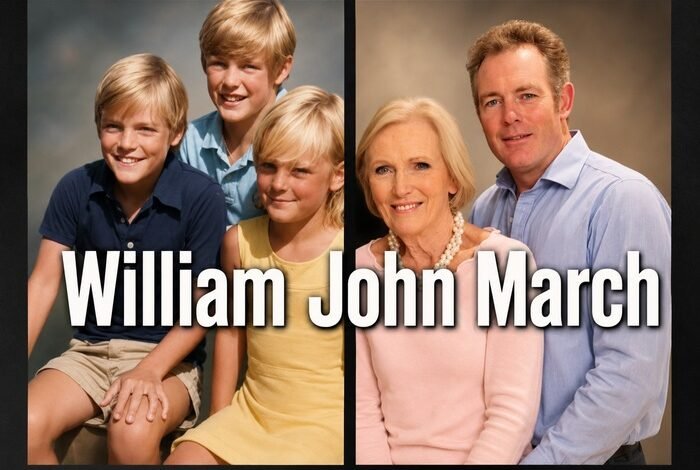
William John March is remembered as the much-loved son of Dame Mary Berry and her husband, Paul Hunnings. He was not a television personality, writer or celebrity. He was a university student with a promising future, a close family and a quiet life away from fame. His death in a car accident in 1989, aged only 19, became the deepest tragedy of the Berry family’s life.
More than three decades later, Mary still speaks about William with warmth and pride. His photographs remain in the family home, and younger relatives know him through stories. His death also shaped Mary’s work with bereaved families.
Who Was William John March?
The fuller form of his name is commonly given as William John March Hunnings. William was the name used by his family, while he was also affectionately called Will. “March” formed part of the family’s naming tradition, and Hunnings was the family surname.
Family-history and memorial records give his date of birth as 3 June 1969 and his birthplace as Paddington, London. He was one of three children born to Mary Berry and Paul John March Hunnings. His siblings are Thomas and Annabel.
William grew up while his mother’s career in food writing and broadcasting was developing. Yet the family maintained a private home life. Mary later became one of Britain’s best-known cooks, but William did not seek attention through her success. Most surviving details about him come from his mother’s memories rather than from press interviews or a career of his own.
Because he died before completing university, no adult career biography exists. There are no verified details about a partner, children, earnings or professional awards. The most meaningful account of him comes from family recollections: a young man who loved sport, valued his studies and returned home for a weekend with the people closest to him. His story should not be padded with invented claims.
The Family Behind William John March
Mary Berry married Paul Hunnings in 1966. Together, they raised Thomas, William and Annabel. Paul worked in the book trade, while Mary built her career through cookery teaching, books and television.
The family lived for many years in Buckinghamshire. Their life included school, sport, meals together and ordinary weekend routines. Mary remembered William as dependable, steady and trustworthy.
His bond with his siblings was an important part of his life. Annabel was with him during the accident that ended his life, and her survival became a source of relief within an unbearable moment of loss.
William John March’s Education and Interests
At the time of his death, William was studying business at Bristol Polytechnic, which later became the University of the West of England. He was enthusiastic about the subject and had returned home from university for the weekend in January 1989.
Mary recalled that he wanted to collect a newspaper because it contained material connected with business studies. This small detail shows a young man engaged with his course and interested in the world he hoped to enter after graduation.
A Sporty and Dependable Young Man
William enjoyed rugby and tennis. Later family stories show that sport remained one way younger relatives felt close to him.
One of Mary’s grandsons once wondered whether William would have been proud of his own rugby achievement. The question moved Mary because the two had never met, yet the family’s stories had made William real to a new generation. Mary has also recalled being comforted when people remembered Will as a good tennis player.
His Favourite Family Meal
The evening before the accident, Mary cooked roast lamb, a meal William loved. He had not been home for a few weekends, so the family valued having him back. They ate together and listened as he spoke with excitement about his studies.
That evening became a treasured memory because William’s last night at home had been happy and filled with ordinary affection.
How Did William John March Die?
William died in a car accident on Saturday, 21 January 1989. He was 19 years old. He had borrowed the family car to collect the weekend newspapers, and Annabel travelled with him.
When they did not return by lunchtime, Mary became worried. A police officer then came to the family home and delivered the news that every parent fears: William had died, while Annabel had been taken to hospital.
Mary and Paul travelled to the hospital in High Wycombe. There, they saw Annabel running towards them in a pink tracksuit, covered in mud but alive. She had escaped without serious physical injury. The sight brought relief, but it could not soften the shock of losing William.
The Family’s Final Goodbye
At the hospital, Mary and Paul were allowed to see their son and say a final goodbye. Mary has spoken with great emotion about seeing William after his death and touching his cold face. The moment was painful, yet it gave his parents a final opportunity to be close to him.
Accounts of the tragedy agree that the accident happened in Buckinghamshire during William’s weekend at home. Memorial material connects his death with Coleshill, near High Wycombe.
The exact road, vehicle details and full official findings have not been established through dependable published documents. Claims involving ice, speed or a collision with a lorry should therefore be treated with caution.
Was William 19 or 20?
Some online pages give his age as 20, but this is incorrect. A birth date of 3 June 1969 and a death date of 21 January 1989 mean that he was 19 and several months short of his twentieth birthday.
Mary Berry and Child Bereavement UK have consistently stated that he died at 19.
The Effect of William’s Death on Mary Berry
Mary has described her son’s death as a loss that never leaves a parent. At first, ordinary life felt difficult. Her husband, surviving children, neighbours, work and garden helped her move through each day.
She has explained that keeping busy did not erase grief. Instead, purpose gave structure to life when sorrow felt overwhelming. She began teaching cooking classes from home so she could remain close to Paul and her children.
A neighbour also encouraged Mary to attend the Chelsea Flower Show. The outing helped her take an early step back into the wider world. It did not mean leaving William behind. It showed her that continuing to live was not the same as forgetting him.
Grief, Faith and Family Strength
Faith became part of the family’s response. William was buried at Holy Trinity Churchyard in Penn, Buckinghamshire. The church’s burial record notes a stone marker and a camellia border.
Mary has said that the tragedy brought the family closer. They did not remove William from conversation or act as though he had never lived. They kept talking about him, shared memories and allowed his place in the family to continue.
This approach remains clear at Christmas, when the family raises a drink to Will. His photographs stay on display, and grandchildren born years after his death know what he enjoyed and why he mattered.
William John March and Child Bereavement UK
Mary’s experience led to a strong connection with Child Bereavement UK, where she became a patron. She has explained that little specialist help was available to her family in 1989. Through the charity, she later met parents and children receiving the care that her own family had lacked.
Her support included the One More Minute campaign. When asked what she would say if she could have one more minute with William, Mary answered that she would thank him for being a brilliant son.
The message captures the way she speaks about him. Her words focus not only on how he died, but also on the happiness he brought during his life.
Mary Berry’s Advice to Bereaved Families
Mary encourages people not to avoid someone after a death. She believes it is better to speak, mention the person who died and share a kind memory.
Silence can leave grieving people feeling alone, especially after the funeral, when much of the early support has faded. Friends and neighbours who stayed close helped the family endure a period that could not be fixed by words. Their presence still mattered.
How William’s Memory Lives On
William remains part of Mary Berry’s family story. In 2026, she again explained that he was still part of their lives. She spoke of the family’s gratitude for the 19 years they had with him and the joy he gave them.
Mary also honoured William during her BAFTA Fellowship acceptance speech, thanking her husband and children and including her late son in the tribute. The moment showed that major achievements do not replace private loss. They can become another place in which a loved one is remembered.
A Private Life with Lasting Meaning
William had no spouse, children, established profession or personal fortune. He died before he could finish university and build an adult career. Reliable accounts do not document romantic relationships, employment history, height, income or personal social accounts.
His significance does not depend on fame or achievement. It comes from the life he shared with his family and the influence his memory had on their values. Through Mary’s charity work and open discussion of grief, his story has also offered comfort to people facing similar loss.
Final Thoughts on William John March
William John March Hunnings was a bright, dependable and sporty young man who was studying business when his life ended suddenly. He was born in London in 1969, grew up as part of a close family and died in Buckinghamshire in January 1989 at the age of 19.
The tragedy changed Mary Berry, Paul Hunnings, Thomas and Annabel forever. Yet the family chose to remember William through photographs, conversation, Christmas tributes and shared stories. Mary’s later support for bereaved families gave that remembrance a wider purpose.
William remains a beloved son, brother and uncle whose place in the Berry family continues through love, memory and compassion.
Frequently Asked Questions About William John March
1. Who is William John March?
William John March, whose full name was William John March Hunnings, was the son of British cookery writer and television presenter Dame Mary Berry. He was studying business at Bristol Polytechnic when he died in a car accident in January 1989.
2. How old was William John March?
William John March was 19 years old when he died on 21 January 1989. He was born on 3 June 1969 and would have turned 20 later that year. Had he lived, he would have been 57 years old in 2026.
3. Who were William John March’s parents?
His parents were Dame Mary Berry and Paul John March Hunnings. Mary Berry is widely known for her cookery books and television programmes, while Paul Hunnings worked in the book trade.
4. Was William John March married?
No reliable record indicates that William John March was married. He died at the young age of 19 while still studying at university and had not begun an established adult career or family life.
5. Who were William John March’s siblings?
William had two siblings: a brother named Thomas Hunnings and a sister named Annabel Hunnings. Annabel was travelling with him during the 1989 car accident and survived.