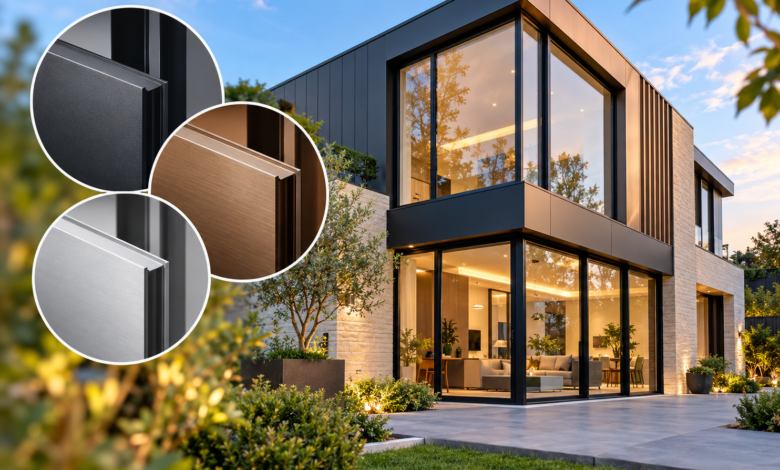
Flick through property features on high-end homes and a pattern soon appears. Slim dark window frames, bronze-toned cladding and crisp metal detailing have become the signature of modern exteriors. The look is striking, but it only works while the metal keeps its colour and finish.
Aluminium is the material behind much of that style, and the finish matters as much as the metal. Anodised finishes are worth understanding because the colour is formed within the surface of the aluminium rather than sitting on top as a layer of paint. That one difference changes how the metal ages.
Finishes tend to be an afterthought. Most attention goes to layout, glazing and interiors, while the surface of the frames gets settled quickly near the end of a project. Since the exterior is the first thing visitors see, and one of the hardest things to redo, it deserves a bit more of the planning budget.
Why Aluminium Suits Modern Exteriors
Aluminium is light and strong, which allows slim frames and large panes of glass without heavy supporting sections. It doesn’t rust, and it can be recycled at the end of its life. Those qualities explain why it features so widely in extensions, glazed rear elevations and contemporary new builds.
Modern aluminium window systems also include thermal breaks, which separate the inner and outer faces of the frame and reduce heat loss. That means the slim, sleek look no longer has to come at the expense of comfort and energy bills.
Bare aluminium isn’t quite maintenance free, though. Left untreated, it dulls and can pit in damp, coastal or polluted settings. A finish is applied for protection and appearance.
Anodising, Paint and Powder Coating Compared
Each option has its strengths. Powder coating and paint offer an enormous choice of colours and are widely available, which makes them practical for matching a specific shade. Over time, however, coatings can chip, lift or fade, particularly on south-facing elevations.
Anodising works differently. The finish is grown from the metal itself, so there’s no layer to peel away, and the sheen has a genuine metallic quality. The trade-off is a narrower palette, largely natural silver, greys, bronzes and blacks, and damage can’t be touched up the way a painted surface can.
Costs vary from project to project, so quotes for each route are worth comparing, ideally alongside the expected maintenance over the years rather than the upfront price alone.
Picking a Colour That Lasts
Colour is where homeowners most often want advice. Bronze and black are popular because they sit well against brick, timber and render, while greys suit cooler, more minimalist schemes.
How the colour is produced matters just as much as the shade. Colours created by depositing metal salts in the anodic layer generally hold up well outdoors. Those produced with organic dyes can be more vulnerable to ultraviolet light over the years. A supplier should be able to explain which method has been used and show how it has performed on real buildings.
Surface texture changes the impression as well. A satin or matt finish tends to look softer and hide fingerprints, while a brighter sheen catches more light and shows its metallic quality. Seeing both in person makes the decision far easier.
Practical Steps Before Ordering
A little preparation helps avoid disappointment once the frames are installed:
- Ask for physical samples and view them in daylight, both in sun and shade
- Hold them against neighbouring materials such as brick, stone or timber
- Check which standards apply and what guarantee is offered
- Find out whether the colour is consistent across batches, especially for extensions added later
- Confirm any planning or conservation requirements before ordering
It’s also worth asking installers whether they’ve worked with the chosen finish before, as careful handling on site makes a visible difference.
Samples are worth the effort. Metal finishes can look noticeably different in a showroom than on a house, and a warm bronze can read as dark brown in shade.
Keeping It Looking Good
Anodised and coated aluminium both benefit from simple, regular cleaning. Warm water with a mild detergent and a soft cloth is usually enough, followed by a thorough rinse. Abrasive cleaners and scouring pads should be avoided, as they can dull the surface.
Homes near the coast need slightly more attention. Rinsing with fresh water every few months removes salt deposits before they can take hold, and it takes only a few minutes.
A quick check of seals and fixings once a year is also sensible, as these are usually the first parts to show wear and can let moisture in around the frame.
Common Questions
Will anodised aluminium fade?
Well-processed electrolytic colours are very resistant to fading, but results depend on the process, the thickness and the environment. Asking for evidence from existing installations is the surest way to judge.
Can it be used on any home?
In most cases, yes. Listed buildings and conservation areas may have extra rules, so a quick check with the local planning authority is sensible before any order is placed.
A Finish Worth Getting Right
The exterior metalwork is one of the first things people notice about a home, and one of the most expensive things to change later. Spending time on the finish at the start, comparing options and testing samples, usually pays off for many years afterwards.