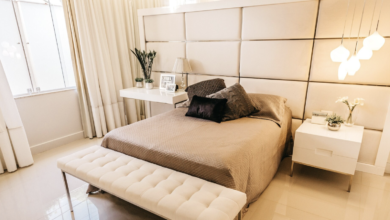
Moving from a double to a king size bed is one of those upgrades that couples rarely regret. More room means fewer elbows in the night and less disturbance when one of you gets up. But a bigger bed changes the whole room, and a little planning before you order can save a lot of frustration later.
Know Your Sizes
UK bed sizes differ from those in Europe and the US, which catches people out when buying online. A standard UK double mattress is 135cm by 190cm (roughly 4ft 6in by 6ft 3in). A UK king is 150cm by 200cm (5ft by 6ft 6in), and a super king is 180cm by 200cm (6ft by 6ft 6in).
That means a king is about 15cm wider and 10cm longer than a double. On paper it sounds modest, but in a smaller bedroom those extra centimetres matter. Remember too that the bed frame adds its own width and length. A chunky upholstered frame or one with a large headboard and footboard can easily add another 10 to 20cm in each direction.
Always check the external dimensions of the frame, not just the mattress size, before deciding whether it will fit.
Measure the Room and Leave Space to Move
Start with a tape measure and a sketch of the room. Note the length and width, then mark where the door, windows, radiators, plug sockets and any built-in wardrobes or chimney breasts sit. Note which way the door opens and how far wardrobe doors and drawers swing out.
A really useful trick is to mark out the footprint of the new bed on the floor using masking tape or folded sheets. Leave it there for a day or two and walk around it as you normally would. You will quickly see whether you can still open drawers, reach the window or get past the bed comfortably.
The bed should not swallow the room. As a general rule of thumb, designers often suggest leaving at least 60cm of clear space on the sides of the bed you use to get in and out, with 75cm or more being more comfortable. At the foot of the bed, a similar clearance makes it easier to walk past and to make the bed.
In a smaller room you may need to compromise. Pushing one side of the bed against a wall frees up floor space, although it makes changing the sheets harder and means one person has to climb over the other. For couples, keeping both sides accessible is usually worth losing a piece of furniture elsewhere.
Consider these points when planning the walkways:
- Can the bedroom door open fully without hitting the bed?
- Will wardrobe doors and chest of drawers open completely?
- Is there a clear route from the door to each side of the bed?
- Can you reach windows, blinds and radiator valves?
- Is there somewhere to put a bedside light and a glass of water on each side?
Choosing Where the Bed Goes
In most rooms, the bed works best with its headboard against the longest solid wall, ideally facing the door or with a view of it. Many people find this position feels settled and makes the room look balanced. Try to avoid placing the bed directly under a window if you can, as draughts and morning light can disturb sleep, and curtains become awkward to reach.
Keep the bed away from radiators where possible. Being pressed against one can make you too warm at night and may also affect the mattress over time. If the only workable wall has a radiator, leave a small gap and consider a slimmer headboard.
Before you finalise everything, it is worth reading the Hypnos king size buying guide or a similar resource to check depth, weight and delivery details. Premium king size mattresses can be deep and heavy, which affects both how the bed looks and how easily it can be handled.
Getting It Into the Room
This step is easy to forget. A king size mattress, particularly a traditional sprung one that does not come rolled in a box, can be difficult to carry up narrow staircases or around tight landings. Measure the width of your stairs, any turns, and the height of doorways. Some divan bases come in two halves for this reason, which makes access much simpler.
If you live in a flat or an older house with a narrow staircase, check with the retailer before ordering. Many will tell you the dimensions of the packaged mattress and whether it can be bent slightly to get around corners. Some mattresses should not be folded at all, so ask rather than guess.
Furniture, Storage and Finishing Touches
A bigger bed may mean rethinking other furniture. Slimmer bedside tables or wall-mounted shelves can free up valuable centimetres. Wall lights or pendant lamps on each side save surface space and look neat. If you are losing floor storage, a divan with drawers or an ottoman bed can make up the difference by using the space under the mattress.
Light colours on the walls and bedding can help a room feel larger once the new bed is in. A low-profile frame without a footboard also keeps sightlines open, which is useful in a compact room. Mirrors placed opposite a window bounce light around and can make the space feel less dominated by the bed.
Finally, remember to budget for new bedding. Your double duvet, sheets and mattress protector will not fit, and deeper premium mattresses may need deep fitted sheets.
Bringing It All Together
Upgrading to a king size bed can make a real difference to how well you and a partner sleep. Measure the room and the frame, mark out the footprint, protect your walkways and check access before ordering. With a bit of planning, the bigger bed will feel like a natural fit rather than something you have to squeeze around every day.