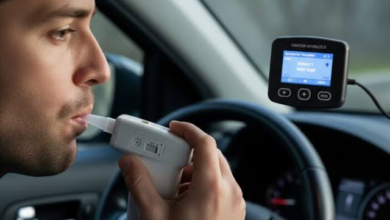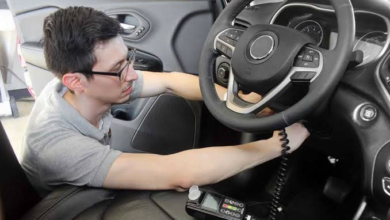
Many people who require an ignition interlock have little problem with the rules. Rather, they have difficulty because the rules are scattered in four or five places, the licensing authority, the court that sentenced them, their interlock service provider, and sometimes a health authority or assessment provider.
This practical guide aims to assist the professional, whether legal or not, who is advising someone with an interlock requirement. This practical guide lists out the basic authorities and what can be used to get the answers to specific questions relating to the interlock requirements and restrictions.
Sorting authoritative sources from secondary commentary
There are three types of sources, statutes and regulations, administrative information from licensing authorities regarding eligibility, forms, dates and so forth, and everything else (e.g. Materials from service providers, legal summaries, etc.), all of which are interpretation.
These are useful in providing information but are immediately outdated on the date a regulation is amended. As interlock programs are amended more frequently than most expect, it is wise to have information regarding the device itself (i.e. Breath sampling, ports, analytical parameters), reporting requirements and the treatment of refusals compared to measured offense(s) to name a few.
A quick reliability test
Check if a document that you are using as reference (e.g. Legal summaries) states which statute or regulation section it is based on. Also check if the document has been updated within the current cycle of the regulations. Verify that the body that issued the document is the one that actually made the decision. Make sure that the document clearly differentiates between mandatory minimums and when extra time at interlock can be given at the discretion of the court or licensing authority.
Eligibility questions that must be answered first
Eligibility for an interlock is not a simple yes/no issue, but rather a series of steps that must be met. This must be explored in sequence to prevent the error of installing a device that the driver is not yet legally able to use.
- Is the underlying prohibition or suspension period complete, or does the jurisdiction allow interlock participation during it?
- Has any required assessment, education program, or treatment referral been completed and reported to the licensing authority?
- Are outstanding fines, reinstatement fees, or administrative penalties cleared?
- Is the driver’s class of license compatible with the restriction, and does the employment exemption, if one exists, apply?
- Does every vehicle the driver intends to operate fall within the restriction’s scope?
The employer vehicle question
The commercial exception is typically restricted to written acknowledgment by the employer of the driver’s exemption, does not include vehicles owned or leased by the driver and does not permit the driver to drive and carry employees to and from work. Verify the language of any commercial exception that applies to your client as there is nothing to prevent such an exception from being misapplied with resulting offense.
Comparing where to direct a specific question
It is necessary to know who is going to answer what questions for the driver with an interlock required. Often, weeks are wasted before the client is referred to the correct body.
| Question type | Correct source | Typical turnaround |
| Length and start date of the restriction | Licensing authority record or court order | Immediate, from the driver’s file |
| Approved device models and installers | Licensing authority’s published provider list | Immediate |
| Assessment or treatment prerequisites | Designated assessment body | Weeks, booking dependent |
| Violation consequences and extensions | Regulation text, confirmed with the authority | Days |
| Device calibration and lockout handling | Service provider | Same day in most service networks |
Reading program rules as they are actually enforced
Intention to comply is irrelevant. It is how you actually behave in relation to logging into the device that matters. Thus, a written program and the actual enforced program are unlikely to be identical.
Finally, advise your client on what will trigger specific “offense” events. Often a client is dismayed to find out that “missed rolling re-tests” or “missed calibration appointments” trigger separate offense consequence paths. Note that some jurisdictions escalate by a simple count of all prior offenses while others look at severity of prior offenses, be sure to confirm with the authority in the jurisdiction where your client drove.
Jurisdictional variation is the rule
Even if a driver is required to install an interlock in another province, thresholds, monitoring periods and violation definitions may vary significantly from those found in Quebec. Before comparing one province against another, it is worth reviewing the current ignition interlock program information Quebec drivers are held to, then obtaining the equivalent material from the appropriate licensing authority elsewhere. A cross border driver therefore requires information on the laws in force in more than one jurisdiction.
Building a verification habit into your practice
It’s best to keep a short document about all jurisdictions in which you practice. This document should contain the citation to the relevant statute or regulation, the current ignition interlock program information on the licensing authority’s website, a list of the program’s current approved interlock providers, and the date on which you last verified each of the above items. You should re-verify this information for each new matter before you advise.
Where a client’s circumstances are on the borderline of compliance or illegally outside of the terms and conditions of an offender’s interlock program (e.g. In another province or country), written determination from the licensing authority is required and should be advised to the driver accordingly and documented to avoid ambiguity for the entire period of restriction imposed upon the driver.