Install an Interlock for a person with a restricted license who is serving a suspension in compliance with a court order as part of practice advice to that client. Most of the problems that are avoidable occur at this stage of practice advice to clients of practitioners and result in loss of compliance credits (i.e. No credit for days of good driving) and reportable delays.
What the provider actually does to the vehicle
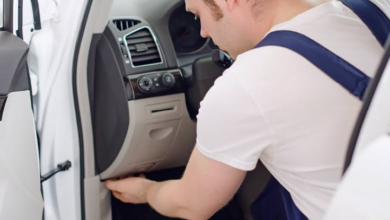
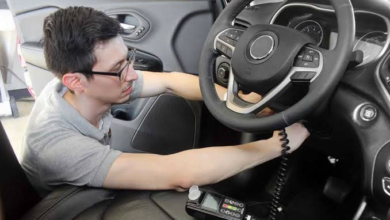
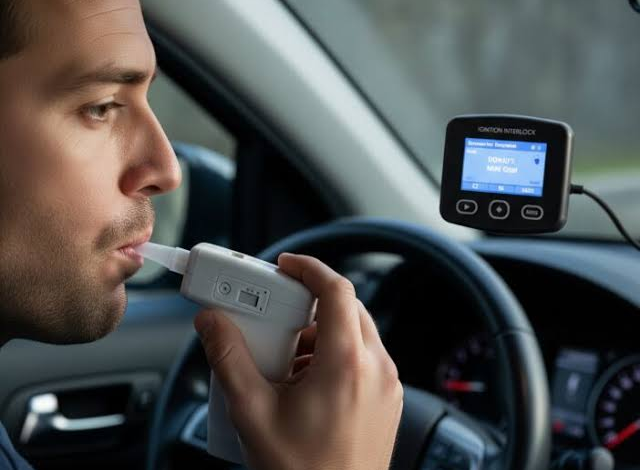
This is a standard electrical install to the ignition circuit of the vehicle’s starter. The wire to the starter and wire to the ignition switch are located and a suitable earth point established. The relay from the Interlock device is then connected into the circuit to ensure that the starter cannot be activated unless a valid breath sample has been given by the handheld unit first. The handheld unit is typically mounted within easy reach of the driver in the vehicle. The control module for the Interlock device is typically hidden from view behind the dash trim of the vehicle.
Most stock passenger cars take about 1-3 hours to complete an interlock installation. Hybrid cars, push-button start cars, cars with aftermarket alarms, and cars with remote start systems can take longer to install and may require a manufacturer-specific wiring harness for installation. The practitioner should determine if such a harness is required and order it in time for the installation.
Calibration and the training session
After connecting all wires to the correct terminals, the unit is then calibrated with a known alcohol concentration solution and programmed for the client’s needs. This includes programming in the fail point for the monitoring authority, re-test interval and any lock-out conditions. Many of the devices require a specific ‘blow’ to be replicated by the user and some also require the user to replicate the humming of the alarm tone. If for any reason the client is unable to replicate the required ‘blow’ on subsequent attempts, these are reported as tamper attempts.
Preparing the client so the appointment holds
Most delays are caused by non-technical items. Create a short list of items required for installation and go over them with the client prior to the scheduled appointment time. Call the client the day before the scheduled appointment and confirm that they have all of the required items.
- Court order, DMV notice, or program referral specifying the device requirements and monitoring period
- Valid restricted license or the documentation authorizing one
- Vehicle registration, and written owner consent if the client does not own the vehicle
- Proof the battery is in good condition, since a weak battery produces false tamper events
- Payment method for installation and the first monitoring cycle
Choosing among approved providers
Each state in which alcohol intercept devices are installed to regulate driving by persons on probation for driving while intoxicated has approved lists of interlock devices to count toward the interlock requirements of suspended licenses of alcoholics. If your client needs a Virginia interlock device installation, it is worth booking with a provider that carries the models the state has actually approved for its program.
And other important factors when comparing prices between Interlock service providers to serve your clients include, The density of service centers across the area of your practice Around-the-clock service for 24-hour a day work shift clients Their lockout policy.
Cost and timing by stage
| Stage | Typical duration | What drives variation |
| Scheduling and vehicle verification | Same day to one week | Harness availability, vehicle type, provider backlog |
| Installation and calibration | One to three hours | Start system, aftermarket electronics, number of vehicles |
| Client training and sign-off | 20 to 45 minutes | Device model, client comprehension, language needs |
| Routine service visits | 30 to 60 minutes each | Monitoring interval set by the state, usually 30 to 60 days |
| Removal | Under one hour | Written authorization from the monitoring authority |
Obligations that begin the moment the device is live
Remember to inform your clients of 4 key items to ensure you are maintaining compliance with a number of factors that can lead to dire consequences, 1. Copy of certificate of installation, 2. Copy of all calibration reports, 3. Copy of all service invoices, and 4. The interlock’s log in case of a violation and the resulting need to argue the installation/usage at said court hearing.
- Rolling retests will be demanded while driving. Pulling over is permitted and safer than attempting a sample in traffic.
- Missed service appointments usually trigger a permanent lockout requiring a tow, and the missed visit itself is reported.
- Disconnecting the battery, allowing another person to blow, or any circumvention attempt is logged with a timestamp.
- Residual mouth alcohol from mouthwash, certain medications, or recent food can register a positive reading. Rinsing with water and waiting a few minutes before testing prevents most of these.
Documenting the record you may need later
Keep a copy of the Installation Certificate, all Calibration Reports, and all Service Invoices. These documents, along with a copy of the interlock device log, will serve as excellent prime evidence to establish compliance and good maintenance in violation hearings.
Confirming requirements against the governing authority
State programs differ as to how many fail points will extend monitoring, how long a person will have to operate an interlock, under what circumstances monitoring will extend, and whether or not a single violation will restart the compliance clock. While the basic statutes may be found on the Web, administrative regulations governing these types of programs are frequently modified between legislative sessions. Thus, the best advice is to contact the appropriate state motor vehicle agency, the sentencing court, or the probation officer of the defendant for the most current information as to the conditions of the particular monitoring program for that defendant. Often summaries have been written for national application and are now outdated.