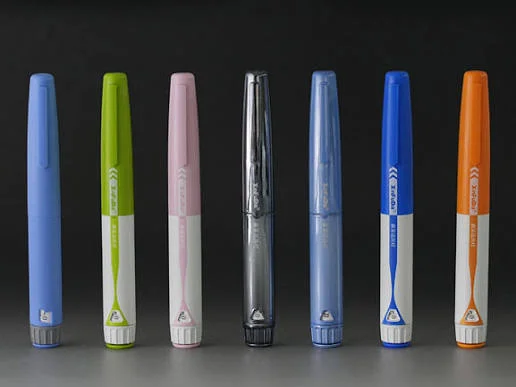
A peptide product’s packaging can influence how easily its contents are identified and how its specifications are communicated. However, product presentation and molecular identity are two different things. A pen-style format does not automatically establish the composition, concentration or analytical characteristics of the material it contains.
This distinction is important when comparing research peptide listings. Researchers need to understand the terminology used to describe different formats, recognise the information presented on product labels and distinguish commercial packaging details from evidence about the underlying material.
1. What Does a Peptide Pen Format Describe?
A pen format refers to a particular type of product presentation. Instead of being described only as a conventional vial, a product may be listed using a pen-style format.
The word “pen” describes the presentation category, not a separate peptide molecule.
This distinction helps avoid confusion when comparing product listings. Two products may contain the same named compound but appear under different commercial format descriptions.
A product’s presentation should therefore be considered separately from:
- Its stated peptide identity.
- The quantity or amount declared.
- Its molecular structure.
- Its chemical composition.
- Its supporting analytical documentation.
These characteristics answer different questions and should not be treated as interchangeable.
2. Packaging Terminology: Understanding the Different Elements
Product packaging contains several elements that communicate information about the listed material.
Understanding these elements makes it easier to interpret product descriptions accurately.
Primary Packaging
Primary packaging refers to the packaging that directly contains the product.
Depending on the format, this may involve a container, cartridge or another product-specific component.
The packaging description helps identify the presentation, but it does not independently establish the chemical characteristics of the contents.
Secondary Packaging
Secondary packaging refers to the outer packaging used to hold or protect the primary container.
It may include printed cartons, protective materials or additional product information.
For product identification, secondary packaging can help connect the visible product with its commercial description and stated specifications.
Product Identification Labels
Labels provide the information used to distinguish one listed product from another.
Clear identification is particularly important when several products have similar names or belong to the same research category.
3. What Information Should a Product Label Communicate?
A well-organised product label should make the listed material easy to identify.
The precise information available depends on the supplier and product category, but useful identification details may include:
| Label element | Purpose |
| Product name | Identifies the listed material |
| Declared quantity | Communicates the stated amount |
| Format description | Distinguishes the commercial presentation |
| Batch reference | Helps connect the product with relevant records |
| Manufacturer or supplier details | Identifies the commercial source |
| Storage information | Provides applicable product-specific information |
Researchers should not assume that every label contains all these details.
More importantly, label information should be consistent with the product description and any available supporting documentation.
4. Why Product Format and Peptide Identity Must Be Separated
One common mistake when reviewing peptide products is assuming that the format establishes the identity of the material.
It does not.
Molecular identity depends on chemical characteristics such as amino acid sequence, composition and relevant structural modifications.
A pen-style presentation does not change the scientific definition of the peptide itself.
For example, retatrutide remains the same named investigational peptide regardless of how a supplier describes its commercial presentation.
Researchers comparing product listings should therefore distinguish between the format and the molecular material being identified.
This is especially relevant when products have similar names but different stated quantities or presentations.
5. Interpreting Quantity and Specification Information
Quantity information is another important part of product identification.
A declared amount describes a commercial specification, but it should not be confused with other measurements.
For example, researchers should distinguish between:
- Total quantity stated on a product listing.
- Concentration, where specifically reported.
- Molecular mass of the peptide.
- Purity measurements from analytical testing.
These values describe different properties.
A product’s stated quantity does not establish its analytical purity. Similarly, a molecular mass measurement does not indicate the total quantity of material in a commercial package.
Keeping these terms separate helps prevent inaccurate product comparisons.
6. Pen Formats and Conventional Vial Descriptions
Pen-style and vial-style descriptions refer to different product presentation categories.
When reviewing catalogues, researchers may encounter both formats within the same broader peptide category.
A comparison should focus on the information actually provided rather than assuming that one presentation offers different molecular characteristics.
| Comparison point | Pen-style listing | Vial-style listing |
| Presentation | Described as a pen format | Described as a vial |
| Product identification | Requires clear product and format details | Requires clear product and format details |
| Quantity information | Should be stated separately | Should be stated separately |
| Molecular identity | Established through relevant specifications and analytical evidence | Established through relevant specifications and analytical evidence |
| Documentation | Should relate to the identified product | Should relate to the identified product |
The table illustrates an important point: product presentation does not replace chemical identification.
7. A Product Example: Understanding a Pen-Style Listing
Commercial listings can provide useful examples of how product format and product identity are presented together.
For instance, researchers reviewing Retatrutide GLP-3 Pen 40mg from Pure Peptides UK can distinguish the listed compound, stated quantity and pen-style presentation when examining its product information.
The commercial term GLP-3 should also be interpreted carefully. It is used in some product naming, but retatrutide’s established scientific receptor profile involves GLP-1, GIP and glucagon receptors.
The product name and format should not be treated as independent confirmation of molecular identity or analytical quality.
8. Supplier Information and Product Presentation Standards
Consistency across product listings makes catalogues easier to understand.
When reviewing a supplier, researchers can examine whether product names, format descriptions and stated quantities follow a clear and consistent structure.
Other useful considerations include:
- Whether product descriptions use consistent terminology.
- Whether the listed format is clearly identified.
- Whether product specifications are easy to locate.
- Whether relevant documentation can be associated with the listed material.
- Whether commercial descriptions avoid unsupported scientific claims.
Researchers comparing product catalogues can also consult British Peptides as a supplier reference when reviewing peptide product categories and available descriptions.
As with any supplier, individual product information should be assessed independently rather than assuming that every listing has identical specifications.
9. Common Product Identification Mistakes
Several misunderstandings can make product comparisons less reliable.
Confusing format with composition: A pen-style description does not establish the exact molecular composition.
Mixing quantity and concentration: These are different measurements and should be interpreted separately.
Assuming similar labels mean identical products: Product names may be similar even when specifications differ.
Treating packaging as analytical evidence: Packaging provides identification information, not independent proof of purity.
Ignoring batch references: Where available, batch information helps connect a product with its supporting records.
Avoiding these mistakes creates a clearer basis for reviewing commercial peptide listings.
Frequently Asked Questions
What is a peptide pen format?
It is a commercial product presentation described as a pen-style format. The term refers to presentation rather than a separate peptide molecule.
Is a peptide pen different from the peptide itself?
Yes. The pen describes the product format, while the peptide is the underlying chemical material.
Does packaging confirm peptide purity?
No. Packaging and labelling provide product information, while purity requires appropriate analytical testing.
Why is quantity information important?
It helps identify the stated amount of material and prevents confusion with concentration, molecular mass or purity measurements.
What should researchers check on a peptide product label?
Useful details include the product name, declared quantity, format description and relevant batch or supplier identification information.
Final Perspective
Peptide pen formats are best understood as product presentation categories rather than separate molecular classifications. Packaging, labelling and quantity information help distinguish commercial listings, but they do not independently establish chemical identity or analytical quality.
Researchers comparing peptide products should examine the stated specifications, distinguish presentation from composition and consider supporting documentation where available.
This approach makes product identification more consistent and reduces confusion when reviewing different peptide formats.