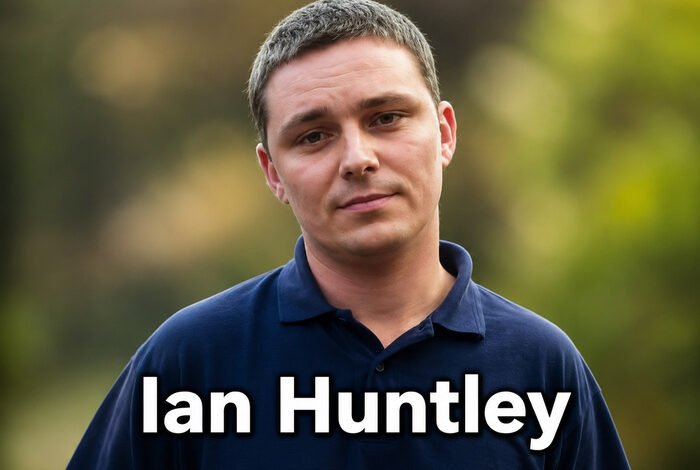
Ian Huntley became one of Britain’s most infamous criminals after the murders of Holly Wells and Jessica Chapman in Soham, Cambridgeshire. Both girls were ten years old. Their disappearance in August 2002 led to a huge police operation and intense national concern. Huntley, who worked as a caretaker at Soham Village College, tried to present himself as a helpful witness. He was later exposed as the man responsible for both deaths.
His case remains important not only because of the cruelty of the crimes, but also because it revealed grave failures in police record keeping, child protection and school vetting. Those failures helped shape major safeguarding reforms across the United Kingdom.
At the time of the crimes, he was 28 and lived in a house provided with his caretaker post. His position placed him near schools and gave him the outward image of a dependable community employee. That image was false. Behind it stood a history of troubling conduct, manipulation and contact with authorities. The contrast between his trusted role and private behaviour became one of the most disturbing features of the case.
Who Was Ian Huntley?
Ian Kevin Huntley was born on 31 January 1974 in Grimsby, Lincolnshire. His parents were Kevin and Lynda Huntley, whose first name has also been written as Linda in some accounts. He had a younger brother named Wayne.
Huntley grew up in the Grimsby and Immingham area. Accounts of his childhood describe bullying, social difficulty and an unsettled young life. He left school with few qualifications and moved through factory, shop and other short-term jobs. These early details may give background, but they do not explain or excuse his later actions.
Marriage, Family and Relationships
Huntley married Claire Evans at Grimsby Register Office on 28 January 1995. The marriage ended quickly, although the divorce was completed in 1999. Claire later married Huntley’s brother, Wayne.
Huntley fathered a daughter in 1998 after a relationship with a teenage girl. His daughter later learnt his identity while completing a school project. She has spoken of the emotional burden caused by discovering that her biological father was a convicted child murderer.
In 1999, Huntley began a relationship with Maxine Carr. The couple moved to Cambridgeshire. Carr later worked as a classroom assistant at St Andrew’s Primary School, which Holly and Jessica attended. Huntley secured the residential caretaker role at Soham Village College.
Ian Huntley’s Past and Missed Warnings
Before the Soham murders, Huntley had come to the attention of police and social services many times. The Bichard Inquiry found that Humberside Police held material connected to allegations of eight separate sexual offences between 1995 and 1999. He had also been investigated in relation to another allegation.
These allegations did not lead to sexual offence convictions. However, they formed a disturbing pattern. Records were deleted, stored poorly or not shared properly. Separate agencies failed to connect the concerns.
How He Passed School Vetting
Huntley used the surname Nixon for a period, which was connected to his mother’s family name. When he sought work at Soham Village College, the vetting process did not uncover the full history held by Humberside Police.
The school also accepted references that he brought himself rather than contacting each referee directly. The Bichard Inquiry later found serious weaknesses in recruitment, intelligence management and communication between forces.
The inquiry was clear that Huntley alone carried responsibility for the murders. Yet it also found deep institutional failures. The case showed that poor systems could allow a dangerous person to work close to children.
What Did Ian Huntley Do?
On Sunday 4 August 2002, Holly Wells and Jessica Chapman attended a family barbecue at Holly’s home. They wore matching Manchester United shirts. Later that evening, they left the house and walked through Soham.
The girls passed Huntley’s home at 5 College Close. They entered the property and were killed soon afterwards. The exact sequence inside the house was never fully established. Medical evidence supported asphyxiation as the probable cause of death, but the condition of the bodies prevented complete certainty.
Disposal of the Bodies
Huntley moved the girls’ bodies in his car and left them beside an irrigation ditch near RAF Lakenheath in Suffolk. He tried to remove evidence by cleaning his house and vehicle. He also cut and burnt the girls’ clothing.
The disappearance caused a vast police operation. Officers, volunteers and members of the community spent thirteen days hoping to find the children alive. Their bodies were discovered on 17 August 2002.
His Behaviour During the Investigation
During the hunt for Holly and Jessica, Huntley spoke to reporters and claimed that he had seen the girls shortly before they vanished. He placed himself close to the inquiry and acted as though he wanted to assist.
Maxine Carr gave him a false alibi. She claimed she had been with him on the night of 4 August, although she was in Grimsby. Her statements helped Huntley for a short time, but inconsistencies soon raised suspicion.
People who recognised him from his former home area contacted the police. Investigators then examined his past, his movements and the physical evidence linked to his home, car and workplace.
Evidence, Trial and Conviction
Police found fibres and other forensic material connecting the girls to Huntley’s property and vehicle. Officers also recovered damaged clothing at Soham Village College. Mobile telephone data, cleaning activity, false statements and the movement of his car strengthened the case.
Huntley was arrested on 17 August 2002. He was first sent for psychiatric assessment at Rampton secure hospital. Doctors later found him fit to stand trial.
Ian Huntley’s Account in Court
The trial began at the Old Bailey in November 2003. Huntley admitted that both girls had died in his house but denied murder.
He claimed that Holly had accidentally fallen into a bath and drowned. He then said Jessica began screaming and that he accidentally suffocated her while trying to silence her. The prosecution argued that this account was false and impossible to accept as two innocent accidents.
On 17 December 2003, the jury convicted him of both murders by majority verdicts. He received two life sentences. In 2005, the High Court set a minimum term of forty years. This meant he could not be considered for parole before 2042, and release would still have required approval based on risk.
Maxine Carr’s Conviction
Carr was not in Soham when the girls died and was not convicted of helping with the killings. The jury cleared her of assisting an offender. However, she was convicted of conspiring to pervert the course of justice because she had given Huntley a false alibi.
She received a three-and-a-half-year sentence and was released in 2004 after serving roughly twenty-one months, including time on remand. She later received legal protection for a new identity because of serious threats.
Ian Huntley in Prison
Huntley spent his sentence in high-security prisons, including Belmarsh, Wakefield and Frankland. His crimes made him a target among other inmates.
He faced attacks on more than one occasion. In 2005, a prisoner threw boiling water over him. In 2010, another inmate cut his throat with a makeshift blade. He survived both incidents. He also harmed himself and took overdoses while in custody, leading prison staff to place him under close observation.
Huntley gave changing accounts during his prison years. None provided a complete, reliable explanation of his motive or the exact way both children died. The central facts remained fixed: Holly and Jessica entered his home, he killed them, moved their bodies and tried to conceal the evidence.
Ian Huntley’s Death in 2026
On 26 February 2026, Huntley suffered serious head injuries during an assault in a workshop at HMP Frankland, County Durham. He was taken to the Royal Victoria Infirmary in Newcastle upon Tyne.
He died on 7 March 2026 at the age of 52. An inquest heard that the provisional medical cause was a blunt head injury. The inquest was opened and adjourned because criminal proceedings were active.
Anthony Russell, another prisoner at Frankland, was charged with Huntley’s murder on 10 March 2026. He had not entered a plea by early June. A trial was set for 23 November 2026 at Newcastle Crown Court. The charge is not proof of guilt, and the matter must be decided by a court.
The Bichard Inquiry and Safeguarding Reform
The Bichard Inquiry was created after Huntley’s conviction to examine how he gained a school job despite earlier police contacts. Its findings exposed failures in record retention, intelligence sharing, alias checks, recruitment and child protection.
The inquiry called for stronger national systems, clearer rules for preserving police intelligence and more effective vetting for people working with children or vulnerable adults. Its work influenced later safeguarding practice and supported the development of stronger criminal record and barring arrangements.
Why the Soham Case Still Matters
The case remains a painful part of British criminal history. It showed how one offender used lies, ordinary employment and a trusted local role to hide serious danger. It also proved that agencies must share concerns, check identities carefully and treat patterns of allegations with proper attention.
Remembering Holly Wells and Jessica Chapman
Any account of Huntley must keep the victims at its centre. Holly Wells and Jessica Chapman were two children with families, friendships and futures. Their deaths caused lasting grief and changed the Soham community forever.
Huntley’s name became known because of an appalling crime. The lasting lesson should focus on the children, the failures that preceded their deaths and the duty to protect others from similar harm.
FAQs
1. Who was Ian Huntley?
Ian Huntley was a British school caretaker convicted of murdering ten-year-old Holly Wells and Jessica Chapman in Soham in August 2002. He received two life sentences with a minimum term of 40 years.
2. How old was Ian Huntley?
Ian Huntley was 52 years old when he died on 7 March 2026. He was born on 31 January 1974 in Grimsby, England.
3. Who were Ian Huntley’s parents?
His parents were Kevin Huntley and Lynda Huntley, whose first name is also written as Linda in some accounts.
4. Was Ian Huntley married?
Yes. He married Claire Evans in January 1995. Their relationship ended soon afterwards, and their divorce was finalised in 1999. He later had a relationship with Maxine Carr.
5. Did Ian Huntley have any siblings?
Yes. Ian Huntley had a younger brother named Wayne Huntley. Claire Evans later married Wayne after divorcing Ian.