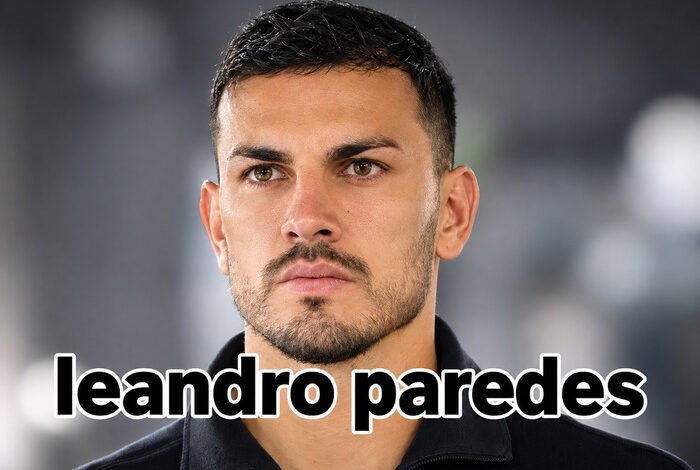
As a boy, Leandro Paredes went to La Bombonera whenever his family could afford the tickets. He watched Juan Román Riquelme play for Boca Juniors and imagined taking his place. At 16, he stepped onto the same pitch in a Boca shirt. At 28, he scored in the penalty shoot-out that made Argentina world champions. By 32, he had returned to Buenos Aires and lifted a continental trophy as Boca’s captain.
The player who came home was quite different from the teenager who left. Paredes had gone to Europe as a creative midfielder who wanted the ball near goal. He returned knowing how to run a match from in front of his own defence. Between those two roles lay eleven years abroad, a family growing up across countries and a promise to his children that they would one day see him play for Boca.
Leandro Paredes quick bio
| Detail | Facts |
|---|---|
| Full name | Leandro Daniel Paredes |
| Date and place of birth | 29 June 1994, San Justo, Buenos Aires Province, Argentina |
| Age | 32 as of 22 November 2026 |
| Nationality and heritage | Argentine, with Paraguayan roots through his mother |
| Height and weight | 1.82 metres tall. Published playing weights range from 73 to 75 kg. |
| Position | Defensive midfielder, right-footed |
| Current club | Boca Juniors, captain and No. 5 |
| National team | Argentina |
| Parents | Víctor Daniel Paredes and Myriam Benítez |
| Wife | Camila Galante, married in December 2017 |
| Children | Victoria, Giovanni and Lautaro |
| Business | Mi Victoria wines |
| Estimated annual salary | US$3 million to US$3.7 million at Boca |
| Net worth | No verified figure |
Early life, parents and education
Paredes grew up in San Justo, west of Buenos Aires. His father, Víctor Daniel, had played for Racing Club as a teenager. When his partner became pregnant, he left football to find paid work. Years later, when Roma asked Leandro to name his childhood idol, he named his father first. Riquelme was the player he watched most closely, but his father had put the game within reach.
His mother, Myriam Benítez, comes from Capiatá in Paraguay. She has spoken about the Paraguayan dishes her son enjoys, including vorí vorí, a soup with small cornmeal dumplings. He speaks Argentine Spanish and knows a little Guaraní. His family background is well documented. A more precise label for his ethnicity or accent would go beyond his own words. He has also kept his religious beliefs private.
The scout who spotted him
Paredes began playing at La Justina when he was about three. He later played for San Pantaleón and Brisas del Sur. During a childhood match against Club Parque, his touch caught the eye of Ramón Maddoni, a scout with a gift for spotting young footballers. Maddoni spoke to the family, and Boca gave the boy a trial.
Football soon competed with school for his time. Paredes interrupted his secondary education as he pursued a place at Boca. When coach Claudio Borghi brought him into the senior side, he urged him to return to his studies. The name of his school and the qualifications he completed remain private.
How Leandro Paredes began his Boca Juniors career
On 6 November 2010, Boca were playing Argentinos Juniors at La Bombonera when Borghi called the 16-year-old from the bench. Paredes replaced Lucas Viatri and played about six minutes. His clearest memory was of the ground itself. He knew what the pitch looked like from the stands. Now he could turn towards those stands and see what a Boca player saw.
He played behind the forwards, in the position Argentines call the enganche. Riquelme helped him settle and told him he saw him as a successor. In November 2012, supporters saw what the older player admired when Paredes scored twice in a 3–1 win over San Lorenzo. His first Boca spell brought 31 appearances, five goals, the 2011 Apertura league title and a Copa Argentina winner’s medal.
Italy changed the way he played
His European career began quietly. Paredes made one league appearance for Chievo Verona in 2014 before joining Roma. Regular football came during a loan at Empoli in 2015–16. Across 33 league games, he learned to take the ball from defenders and pick a pass with most of the pitch in front of him.
From No. 10 to No. 5
The difference was in the decisions. A No. 10 might receive the ball between two defenders and have one chance to release a forward. Playing deeper, Paredes could draw an opponent towards him, turn and open up the other side. When he returned to Roma, he could practise that craft alongside Daniele De Rossi, one of Italy’s most experienced midfielders.
Zenit, Paris Saint-Germain, Juventus and Roma
Zenit Saint Petersburg signed him in July 2017. He produced ten goals in 61 games for the Russian club before joining Paris Saint-Germain in January 2019. In Paris, he won French league titles and played behind an attack featuring Neymar, Kylian Mbappé and Ángel Di María. He started the 2020 Champions League final in Lisbon, which Bayern Munich won 1–0.
Paredes made 117 appearances for PSG and scored three goals. Juventus then took him on loan for the 2022–23 season. He played 35 times for the Turin club before rejoining Roma in 2023. His second spell in the Italian capital brought 81 appearances and nine goals. In July 2025, he left for Boca on a contract running to December 2028.
Argentina career, World Cup goals and discipline
Paredes marked his Argentina debut on 13 June 2017 with a curling finish from outside the penalty area in a 6–0 win over Singapore. Four years later, he helped Argentina win the Copa América. At the 2022 World Cup, two of his most valuable kicks came after the match clock had stopped.
He scored in the quarter-final shoot-out against the Netherlands, then took Argentina’s third penalty against France in the final. After a 3–3 draw, he drove his kick past Hugo Lloris. Gonzalo Montiel scored Argentina’s next penalty to win the World Cup. Paredes won another Copa América in 2024, coming off the bench in extra time against Colombia before Lautaro Martínez scored the winner.
What happened with the World Cup ban?
Two different World Cup incidents are often confused. In 2022, Paredes kicked the ball towards the Dutch bench after a foul. Players confronted one another, and the referee gave him a yellow card. He stayed on the pitch. His ten-match international ban came four years later, following a confrontation after Argentina lost the 2026 final to Spain. FIFA upheld the suspension in November. By the end of that tournament, he had earned 84 senior caps and scored five goals.
Wife, children and business interests
Paredes met Camila Galante through one of his youth-team teammates, her brother. They knew each other before football took him overseas and married in December 2017. Their daughter Victoria is the eldest of three children, followed by Giovanni and Lautaro. His return to Boca gave the children a chance to see why their father has La Bombonera tattooed on his chest.
Galante founded Galante Cosmética, her own beauty business. Paredes took part in a campaign for its men’s products in 2026. His own venture is Mi Victoria, a wine brand made with the Barberis family winery in Mendoza. The collection includes LP5, LP32 and 1994 Malbec. The numbers on the first two labels recall shirts he has worn during his career.
Salary, income and net worth
Football contracts are his main known source of income. Estimates place his annual Boca salary between US$3 million and US$3.7 million. His exact pay, bonuses and personal earnings from wine sales remain private. A credible net worth figure would require details of his assets and debts. Neither the price of a transfer nor the value of a playing contract establishes his personal wealth.
Latest news and legacy at Boca Juniors
On 21 November 2026, Boca beat Atlético Mineiro 2–0 in Barranquilla to win their third Copa Sudamericana. Santiago Ascacíbar and Miguel Merentiel scored. Paredes felt dizzy during the game, went off in the second half and later collapsed during a television interview. He received medical attention and went to a clinic for tests. He later thanked supporters and described the episode as dizziness.
For Boca supporters, the lasting image of the night was their captain with the trophy. Paredes had left Argentina as a teenager carrying the expectations that came with Riquelme’s praise. He came back able to give Boca something different from his idol. He could start attacks from deep, take a penalty with a final at stake and lead the club his father once took him to watch.
Leandro Paredes FAQs
1. Who is Leandro Paredes?
Leandro Daniel Paredes is an Argentine footballer who captains Boca Juniors and plays as a defensive midfielder. He won the 2022 FIFA World Cup with Argentina and scored in the final’s penalty shoot-out against France.
2. How old is Leandro Paredes?
He is 32 years old as of November 2026. He was born on 29 June 1994 in San Justo, Argentina.
3. Who are Leandro Paredes’s parents?
His parents are Víctor Daniel Paredes and Myriam Benítez. His father played youth football for Racing Club and inspired his love of the game. His mother comes from Capiatá, Paraguay.
4. Is Leandro Paredes married?
Yes. He married Camila Galante in December 2017. They have three children together, Victoria, Giovanni and Lautaro.
5. Does Leandro Paredes have siblings?
Yes. His mother has spoken about raising three children, and his sister has publicly supported him during his career.