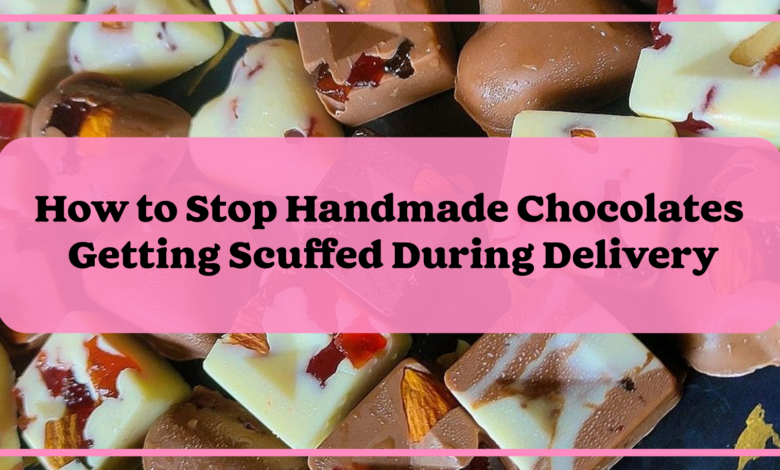
Handmade chocolates are judged partly by their finish. A shallow scratch or displaced decoration may make an otherwise sound product look mishandled. Protecting that finish requires control of movement, contact surfaces and the delivery environment.
Identify where marks appear
Inspect the chocolates before packing and photograph a representative sample. If damage is already present, review demoulding, handling and preparation before changing the delivery pack.
Choose Candy Boxes with an arrangement that keeps pieces from rubbing together. Individual cups or suitable dividers can help separate products, but they must fit the chocolate without pressing against a delicate decoration.
Check every contact surface
Use materials suitable for direct food contact where they touch the product. Decorative tissue or printed board should not be assumed suitable simply because it looks clean. Confirm the intended use with the supplier.
Avoid loose decorative filler around unwrapped chocolates. It may shift during transit or contact the surface unpredictably. A controlled arrangement is easier to inspect and repeat.
Account for the delivery conditions
Surface damage and temperature damage are different problems. A scuff follows contact; melting or bloom may involve conditions beyond the box structure. Assess the recipe, season, route and delivery service before deciding what protection is needed.
Do not assign a shelf life from the packaging appearance. Follow the product’s validated storage and food-safety requirements, particularly where fillings need specific controls.
Match the layout to the assortment
Measure the finished chocolates, including raised decoration and any paper cups, rather than relying on mould dimensions alone. A piped detail or uneven handmade finish can change the clearance needed above and around each piece.
An assortment with several shapes may need different positions for different chocolates. Keep taller pieces away from areas where the lid sits lowest and avoid placing a delicate decoration against a divider edge. Use a packing photograph that shows the correct orientation, not simply the flavour order.
Try lifting each piece from its compartment. If removal requires squeezing the chocolate or dragging it against the side, the fit is too restrictive for a pleasant gift experience. A secure arrangement should still leave a practical way to take the product out.
Check handling before sealing
Work with clean hands, suitable tools and the hygiene procedures appropriate to the business. Choose handling points that avoid decorated surfaces. A repeated mark on the same part of every piece may originate at the packing station rather than during delivery.
Inspect the inside of the pack for rough edges, loose material and residue before filling it. Food-contact suitability and a clean appearance are separate considerations; both need attention. Any inner liner or cup should be appropriate for the intended product and conditions.
Keep filled packs protected while they wait for the next stage. Do not stack open assortments where another lid, tray or tool can touch the chocolates. Establish a clear point at which the product has passed its appearance check and is ready to close.
Use damage patterns to choose the next change
If marks appear on facing sides, pieces may be rubbing against each other. If decoration is flattened on top, investigate lid clearance or stacking pressure. If pieces arrive rotated or upside down, consider how much movement is possible within the arrangement.
Change one part of the layout and repeat the same representative trial. Adding several protective components at once may hide which change helped and can make removal more difficult. Keep notes showing the chocolate version, packing arrangement and delivery conditions.
A box that prevents rubbing does not automatically provide suitable temperature control. Review seasonal dispatch decisions and the intended service separately, using requirements appropriate to the recipes and fillings. Avoid promising that a decorative outer pack will prevent melting.
Check the customer’s first opening as part of the trial. Flavour identification, allergen information and any storage instructions should remain accessible without rearranging loose chocolates. The finished gift should look deliberate and be straightforward to share.
Before scaling production, ask another trained packer to reproduce the approved arrangement from the instructions. If they need repeated verbal corrections, improve the reference photographs or simplify the layout. Consistency at the packing station is an important part of protecting a delicate finish.
Test a complete order
Pack the assortment customers will receive, including cards and any outer transit protection. Trial the route and compare arrival photographs with the original sample. Note whether damage occurs near the lid, between pieces or around the edge.
When commissioning custom packaging uk, share those observations along with the chocolate dimensions. A supplier can address fit more effectively when the problem is described precisely rather than as a general request for stronger packaging.
Keep the approved layout at the packing station and handle finished pieces consistently. A successful trial should become a repeatable process, with checks whenever the assortment or decoration changes.