
Marketing agencies help building materials brands reach industry buyers by placing manufacturer data, technical compliance details, and product stories into the daily work of architects, engineers, general contractors, and trade installers. Building products need a different approach from ordinary consumer goods. An experienced marketing agency for building materials brands connects engineering performance with specification software, supply channels, and commercial buying decisions.
Sales in construction rarely depend on a quick emotional response or wide consumer awareness. Buyers need proof of reliability, code compliance, and easy installation across a network of companies and professionals. A specialist agency connects factory output with the way an architect draws, an engineer calculates, and a subcontractor prepares a bid.
Why Building Materials Brands Need Specialized B2B Marketing
General marketing often misses the mark in construction because buyers are careful about risk. When an architect specifies a building envelope or a structural fastener, their professional reputation and legal responsibility are involved. A product failure can cause major delays, water damage claims, or code problems. Specialist B2B agencies understand these risks and avoid broad slogans that technical buyers find unhelpful.
Commercial sales timelines also differ from retail sales funnels. A buyer may first discover a product eighteen months before construction begins. This calls for steady contact across several channels over a long period. Long sales timelines require careful planning, lead follow-up, and a clear view of how specification data moves through each project stage.
Which Industry Buyers Influence a Purchase Decision?
Commercial building products are rarely selected by one person alone. The architect or other design professional often begins the specification process. This person may focus on appearance, building envelope performance, life-safety codes, and sustainability measures. Structural and mechanical engineers then review the design, checking physical limits, load capacity, and compatibility with other systems.
When plans reach the tender stage, general contractors and trade subcontractors have a strong effect on whether the specified product reaches the site. Tight schedules and limited budgets-along with more than 70% of contractors reporting ongoing concern about material price changes and higher labor costs-often lead installers to suggest “or equal” alternatives. Agencies help manufacturers speak with each group so the original specification has a better chance of surviving the bidding process.
How Agencies Connect Marketing Activity to Revenue
It has long been difficult for building product manufacturers to connect an online click or impression with pallets delivered to a jobsite. Modern agencies address this issue with clear digital-to-offline tracking. They monitor actions such as CAD and BIM downloads, sample orders, technical submittal reviews, and distributor inventory searches. This helps show how early online interest relates to later increases in wholesale demand.
Agencies also work with sales leaders to connect customer relationship management (CRM) systems with distribution reports. They assign pipeline value to high-interest actions, such as attending a lunch-and-learn or requesting a custom specification draft. This lets companies judge marketing by real project growth and dealer sales instead of surface-level numbers.
How Agencies Build a Positioning and Brand Strategy
Clarifying Product Advantages, Specifications, and Applications
In a crowded market, saying that a material is “high quality” or “innovative” does little for an experienced specifier. Agencies review a manufacturer’s engineering information to find real product differences. This may include a patented tongue-and-groove profile that cuts installation labor by 20% or a special coating that improves UV resistance in coastal areas. The agency turns these technical details into clear buyer benefits.
Agencies then place this information into easy-to-use specification sheets, application charts, and comparison tables. Architects and contractors can make faster decisions when they can see where a product belongs in an assembly, which substrates it bonds with, and the weather conditions needed for curing.
Turning Certifications, Testing, and Compliance Into Buyer Proof
Building codes control which products can be used in many construction projects. An agency helps brands turn test reports-such as ASTM standards, UL fire ratings, ICC-ES evaluation reports, and Miami-Dade County hurricane approvals-into clear proof of performance. Instead of hiding these documents in a difficult-to-find PDF library, agencies place compliance badges and test summaries on landing pages and sales materials.
Clear technical information also helps brands respond to competitor claims. Verified third-party lab results, paired with simple installation instructions, reduce the concerns that may lead cautious specifiers back to familiar legacy brands.
Positioning Sustainability, Durability, Availability, and Total Cost
Commercial buyers judge materials by both environmental impact and financial value. Agencies build messages around low embodied carbon, recycled content, and non-toxic chemistry. They support these claims with verified Environmental Product Declarations (EPDs) and Health Product Declarations (HPDs). This helps brands fit into green building programs and local carbon limits.
Agencies also connect sustainability with practical issues such as product life, lead times, and total installed cost. By comparing purchase price with maintenance needs, expected service life, and on-site labor savings, the agency gives manufacturers a way to compete with cheaper, lower-grade products.
Creating Consistent Messaging for Technical and Commercial Audiences
A major brand challenge is keeping one clear identity while speaking to people with very different priorities. A specifier may focus on sound reduction and thermal bridging, while a dealer owner may focus on annual sales and warehouse space. Agencies create a messaging system that brings these needs together under one company position.
Core message points give internal teams and sales representatives a shared structure. Trade show signs, technical whitepapers, online ads, and distributor sales sheets can all support the same identity: a dependable and forward-looking industry supplier.
How Agencies Improve Visibility Across Search and Digital Channels
Building an SEO Strategy Around Product and Specification Searches
Architects, engineers, and estimators often use search engines to solve specific structural or assembly problems on active projects. Instead of focusing only on broad and highly competitive keywords, an agency targets detailed, high-intent phrases such as “continuous insulation details for steel stud walls” or “Class A fire rated exterior wall assemblies.”
These searches often come from buyers who are designing a project or fixing an installation issue. By optimizing the manufacturer’s website for exact technical questions, agencies reach specifiers when product choices are being added to project manuals. A studio like Built For Studio can support this by giving each technical detail its own clear, well-structured page that is easy to find and reference.
Optimizing Product Pages, Technical Documents, and Location Pages
A manufacturer’s website should work as an online technical resource. Agencies update product pages so visitors can find CAD blocks, BIM objects, structural load tables, safety data sheets, and CSI three-part specifications within one or two clicks. If an architect cannot find a fire rating or dimension drawing in less than a minute, they may leave and use a competitor’s product.
Agencies also prepare technical documents for search indexing. They use clear PDF metadata, searchable text, and links to related system parts. This helps search engines identify the engineering knowledge contained in those files.
Supporting Local SEO for Branches, Dealers, and Distributors
Physical materials usually need to be sourced near the project, so local search visibility matters. Contractors and tradespeople often use mobile phones to find nearby inventory, trade counters, or certified fabricators. Agencies improve Google Business Profiles and local listings for manufacturer branches and approved dealer networks.
Schema markup and location pages help local buyers find distributors that carry the product in their area. This connects broad brand awareness with actual product availability and delivery to the jobsite.
Using Paid Search and Display Advertising To Reach High-Intent Buyers
Paid media gives building materials brands quick visibility for urgent commercial searches. Agencies run targeted Google Ads campaigns around procurement terms, competitor names, and building code updates. They also use negative keywords to filter out DIY shoppers and homeowners when the campaign is aimed at commercial builders.
Programmatic display and geofencing campaigns can support paid search. These campaigns may focus on industry conferences, national homebuilder offices, or large commercial job sites. This places brand messages in front of project managers, estimators, and site superintendents while they are planning material purchases.
Combining LinkedIn, Email, Video, and Industry Publications
A strong digital plan uses several media types to build trust over time. On LinkedIn, agencies run sponsored content about completed engineering projects, notable architectural installations, and sustainable building work. The platform allows targeting by job title, company size, and professional association.
Agencies also use trade publications such as Architectural Record, Building Design+Construction, and Engineering News-Record through native ads and digital sponsorships. Automated email campaigns support these efforts with whitepapers, research updates, and invitations to technical webinars.
How Agencies Create Content That Moves Buyers Toward a Decision
Matching Content to Awareness, Evaluation, and Purchase Stages
Construction content must help buyers complete a real task. During early research, specifiers may want design ideas, system overviews, and information about broad industry trends. Agencies respond with project galleries, architectural photography, and trend reports that show how a product can be used.
As buyers compare products and prepare to purchase, agencies provide more technical proof. Engineering whitepapers, installation instructions, and material comparison charts give project committees the facts they need before approving a large order.
Publishing Technical Guides, Comparison Pages, and Installation Resources
When trades compare materials, they want proof that a new product will not reduce jobsite productivity or cancel a warranty. Agencies create comparison pages that place product features beside those of established alternatives. They may compare weight per square foot, thermal resistance, required fasteners, and curing time.
Installation manuals, best-practice guides, and troubleshooting lists give field supervisors more confidence. By explaining common problems and showing correct flashing, joint treatment, and fastening methods, the brand becomes a useful jobsite resource rather than just another supplier.
Creating Product Videos, Demonstrations, and Project Walkthroughs
Video is a useful way to show how a building product performs. Construction professionals often want to see a product being handled and tested. Agencies write and produce high-definition demonstrations featuring destructive tests, severe weather simulations, and jobsite time trials.
Video teams can also interview foremen at active sites and show how quickly a product installs compared with older methods. Drone tours of completed projects, combined with comments from the lead architect, provide strong peer evidence for audiences on YouTube, LinkedIn, and other channels.
Using Case Studies, Testimonials, and Architect Project Features
A completed building is one of the strongest marketing assets in construction. When an architect or major general contractor publicly supports a product, future buyers often feel less risk. Agencies find notable installations and develop them into detailed architectural case studies.
These studies should go beyond a standard public relations announcement. They can explain how the project handled difficult structural tolerances, thermal envelope gaps, or demanding municipal occupancy dates. Showing the exact problems the brand solved builds trust with project teams facing similar conditions.
Developing Interactive Calculators, Selectors, and Specification Tools
Specifiers and estimators value tools that save time during design and material takeoff. Agencies create web applications such as material usage calculators, wind-uplift selectors, acoustic performance estimators, and embodied carbon comparison tools. Users enter project details and receive product suggestions based on those inputs.
These tools help both sides. Professionals receive useful engineering information right away. Manufacturers can collect project stage details, estimated square footage, and contact information when users request a calculation report.
How Agencies Reach Architects and Specifiers
Getting Products Included in Architectural Specifications
To win commercial work, a building product needs to appear in the project specifications, often within Divisions 03 through 14. Being listed as the basis of design or as an approved equal makes a later product change harder. Specialist agencies know how to format product details as CSI MasterFormat three-part specifications.
Agencies help manufacturers place these documents in design libraries such as ARCAT, Sweets, and CADdetails. When specification writers can quickly copy accurate performance language into project manuals, one of the biggest barriers in the design process is removed.
Promoting BIM Files, CAD Details, EPDs, and Technical Submittals
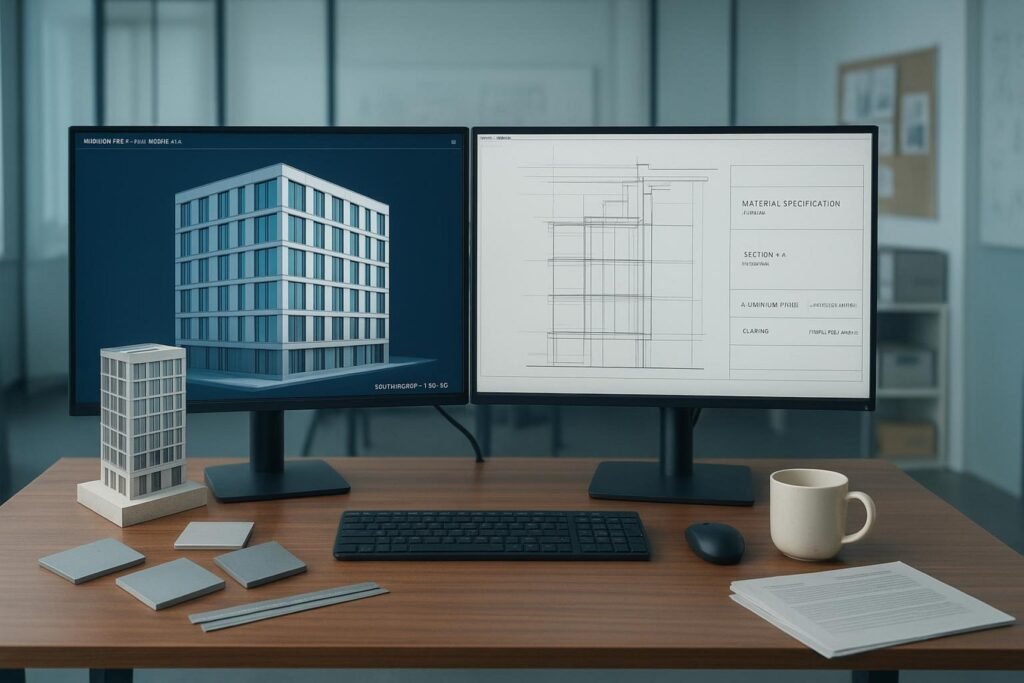
Modern design work depends heavily on Building Information Modeling (BIM). Architects and structural engineers use platforms such as Autodesk Revit to build detailed 3D models instead of drawing only two-dimensional lines. BIM objects must be light, accurate, and filled with reliable performance data.
Research shows that manufacturers with strong BIM objects can be up to fourteen times more likely to appear in early designs. Agencies make these models, standard CAD connection details, and third-party verified EPDs easy to find on manufacturer websites and major BIM marketplaces. This turns design files into useful sources of new project leads.
Building Relationships With Architecture and Design Communities
Reaching specifiers requires a brand to take part in design communities. Agencies build partnerships with regional American Institute of Architects (AIA) chapters, the Construction Specifications Institute (CSI), and international design groups. They support these relationships through design awards, student competitions, and sponsored discussions.
By meeting designers outside a direct sales conversation, brands can build lasting goodwill. Agencies may organize online roundtables where architects discuss new design problems. This positions the manufacturer as an approachable partner that can help develop components for unusual projects.
Supporting Continuing Education and Industry Events
Architects must complete continuing education credits each year to keep their professional licenses. AIA-approved Continuing Education System (CES) courses, often offered as lunch-and-learn webinars or firm visits, give manufacturers a useful way to present technical information to a full design studio.
Agencies create approved courses about code updates, building science, and sustainable material systems without making the session feel like a sales pitch. They also manage booths and event activity at major shows such as the AIA Conference on Architecture, the NAHB International Builders’ Show (IBS), and the World of Concrete.
How Agencies Generate and Nurture Qualified Industry Leads
Designing Conversion-Focused Websites and Landing Pages
Many building product websites act like static brochures. A specialist agency reorganizes the site around clear paths for commercial users. Visitors are directed by role: architects find specification tools and BIM libraries, while contractors find distributor locators, pricing catalogs, and technical submittal packages.
Landing pages use plain language and clear trust signals, including third-party test marks, project images, and contact details for local architectural representatives. Fast mobile loading, clean layouts, and a logical order of information help visitors stay on the site and become active prospects.
Using Forms, Sample Requests, Quote Requests, and Distributor Locators
In construction, requesting an architectural sample can signal that a product is being considered for a live project. An architect or interior designer may need the physical sample to show the building owner or design team. Agencies create simple sample request forms and quick fulfillment processes on the website.
Quote forms also collect useful project details, including project type, estimated square footage, construction start date, and bidding contractor status. Distributor locators connect contractors who need quick delivery with local dealers that have stock, helping create sales without extra delays.
Applying Account-Based Marketing to Priority Companies
A small group of national accounts, such as ENR Top 100 general contractors or large multifamily developers, may generate a large share of a manufacturer’s annual sales. Agencies use Account-Based Marketing (ABM) to reach these high-value companies.
They may combine IP-based display ads, personalized mail kits with engineered samples, and targeted LinkedIn outreach. Several project managers, sustainability staff, and estimating leads at the same company see the brand at the same time. This can build internal support across a large project team.
Automating Email Nurture for Longer B2B Sales Cycles
Commercial projects can take months or years to move from an early idea to completion. Without regular follow-up, leads can lose interest. Agencies build automated email programs that respond to how users interact with online materials.
For example, if an engineer downloads a whitepaper about acoustic vibration isolation, the system can send related CAD details, case studies for similar facilities, and an invitation to speak with a technical advisor. This steady, low-pressure flow keeps the brand familiar until the project reaches purchasing.
Scoring Leads and Routing Them to the Right Sales Representative
Website visitors do not all have the same business value. A homeowner looking for driveway repair should not receive an immediate call from an enterprise field engineer. Agencies use lead scoring models based on company size, job title, project scale, and online activity.
High-scoring leads-such as an architecture firm requesting a specification draft for a 200-unit mixed-use project-are moved into the CRM for quick action. The system sends the opportunity to the right territory sales manager and includes the pages viewed and files downloaded by the buyer.
What Building Materials Brands Should Look for in a Marketing Agency
Experience With Construction, Manufacturing, and Technical Products
Construction has its own terms, rules, and business processes. Building materials brands should look for agencies with experience in technical manufacturing and construction supply chains. An agency that does not know the difference between R-value and U-factor, or between a general contractor and a specification writer, may spend months learning basic concepts.
Review case studies involving technically complex products. A suitable agency should be comfortable reading engineering drawings, speaking with structural specialists, and discussing commercial building assemblies.
Knowledge of Industry Buyers and Distribution Channels
A strong agency needs to understand the multi-step distribution model. It should know how independent manufacturer representatives work, how two-step distribution operates, and why dealer margins matter to physical market coverage.
If an agency recommends a direct-to-consumer e-commerce plan for a heavy commercial product without discussing the effect on regional dealers, that is a warning sign. The right partner can support online growth while protecting long-standing channel relationships.
Capabilities Across SEO, Content, Paid Media, CRM, and Analytics
B2B marketing works best when its main skills operate together. Long-term growth calls for a team that can manage technical web development, engineering copywriting, search optimization, paid media, and CRM setup.
When these skills work together, each activity supports the next. Technical whitepapers feed search content, search data informs paid campaigns, sample requests enter the CRM follow-up process, and analytics guide future product messages.
A Clear Process for Goals, Reporting, Approvals, and Sales Alignment
Marketing partnerships need clear working rules. Brands should choose agencies with documented project management, defined approval steps for technical content, and clear key performance indicators (KPIs). The agency should explain how it will work with technical experts, legal teams, and territory sales representatives.
Regular reporting is required. The agency should hold strategy reviews that cover campaign results, pipeline credit, and planned changes. This lets the brand connect marketing spending with business goals.
Questions To Ask Before Signing an Agency Agreement
Before signing a partnership, company leaders should ask specific questions that test the agency’s construction knowledge:
- “How will you account for the six-to-eighteen-month commercial specification sales cycle in your digital attribution model?”
- “What is your plan for preparing our technical assets for Revit, MasterFormat specifications, and BIM libraries?”
- “How will your online campaigns support our regional independent dealers and distributor network?”
- “Can you describe a past campaign where you protected an architectural specification from a cheaper contractor substitute during bidding?”
- “Who will write our technical content, and what experience do they have with engineering or building science?”
An agency that answers clearly and can support its claims with industry case studies and field data may become a valuable long-term growth partner.
How a Marketing Agency Turns Buyer Reach Into Sustainable Growth
As construction changes, reaching industry buyers takes more than occasional advertising and traditional distributor golf events. Faster digital adoption, detailed building codes, strict carbon targets, and ongoing labor shortages mean architects, engineers, and contractors want quick access to reliable technical data. They prefer manufacturers that respect their time, reduce project risk, and help solve jobsite problems.
A specialist marketing agency connects complex material engineering with professional adoption. It turns product catalogs into searchable BIM models, presents lab results as clear proof, and links online campaigns with physical distribution networks. For building materials brands ready to move past outdated marketing methods, the right agency partner can do more than raise visibility. It can turn access to industry buyers into steady market growth.